
Celebrity 📖 4 min read
A few years ago, a famous person’s business role was mostly “face of the brand”. Today, more public figures want to own the company itself. Walk through any beauty aisle, fashion app or snack shelf and you are likely to find products created by a performer, athlete or creator. This shift is not an accident. It reflects changes in how people shop, how social media works and how stars think about long-term income.
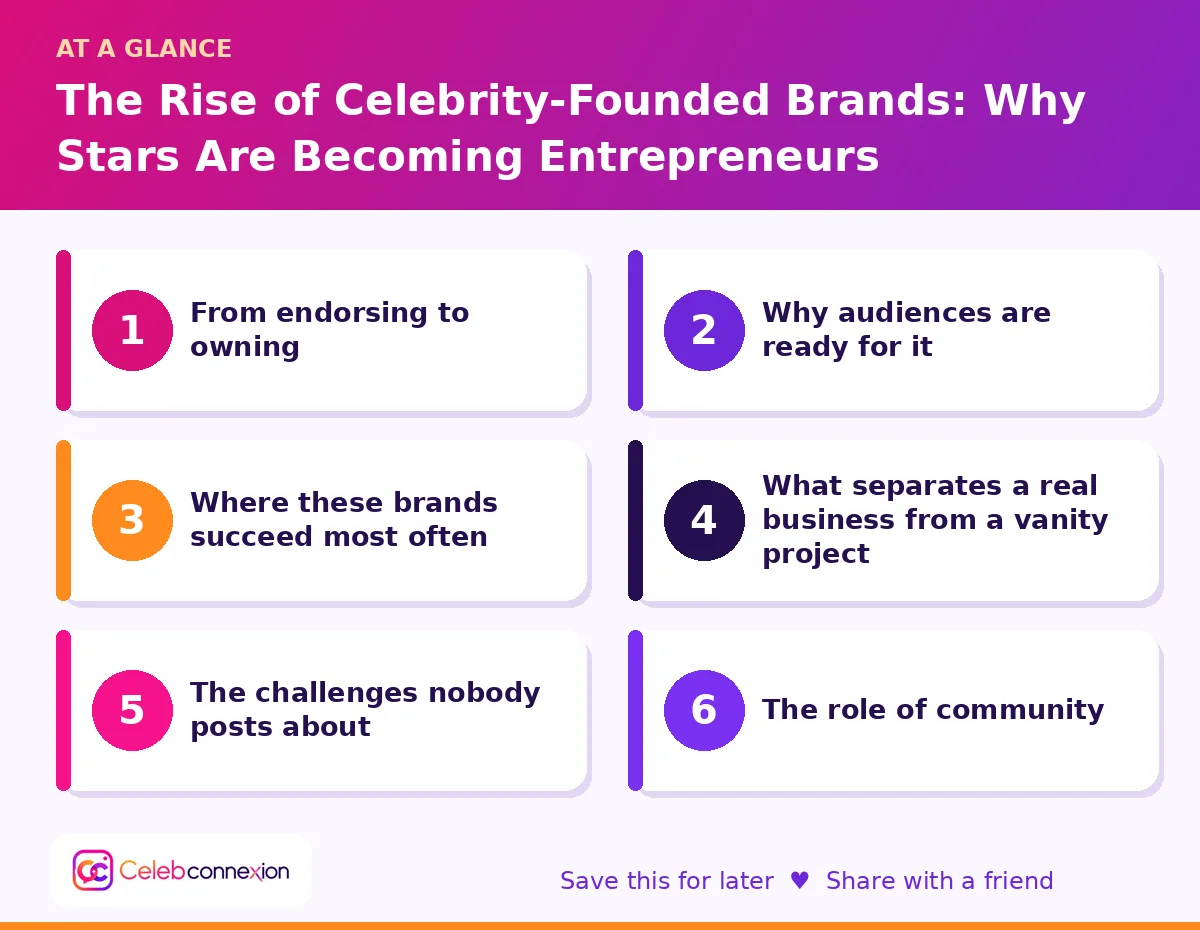
From endorsing to owning
Endorsement pays once, and the brand keeps most of the upside. Ownership flips that equation. When a public figure builds a label, they share in the profit, control the product and decide how the story is told. For people whose careers depend on trends and public attention, a business that keeps earning when films or seasons end offers stability.
Why audiences are ready for it
Social media has shortened the distance between fans and public figures. Followers already feel they know a person’s taste, routines and opinions. That familiarity gives a celebrity-founded brand a head start: the audience is not meeting a stranger’s product, it is trying something connected to someone they follow. Direct-to-consumer selling, online payments and quick delivery have also made it much easier to launch without a large retail network.
Where these brands succeed most often
Categories such as beauty, skincare, fashion, wellness, food and beverages are popular because personal taste and lifestyle matter. A person who has spent years talking about skin routines or style choices can build a believable label around that interest. Success is less likely when the product has no link to the founder’s known passions. People can sense when a name has simply been attached to a generic item.
What separates a real business from a vanity project
The brands that last tend to share a few habits. First, the product is genuinely good, because fame can drive a first purchase but only quality brings repeat orders. Second, the founder is involved in decisions rather than only posting. Third, the company hires experienced operators for manufacturing, finance, logistics and customer service. Fourth, the brand has a clear promise that stands without the founder’s face in every ad. Vanity projects usually miss one or more of these.
The challenges nobody posts about
Running a product company is difficult. Inventory has to be forecast, suppliers managed, returns handled and cash flow protected. Regulations around cosmetics, food or supplements add compliance work. Customer expectations are high because buyers may feel they are owed a close connection to the founder. A single product complaint can attract extra attention precisely because of the famous name attached. Brands that prepare for these problems recover faster.
The role of community
Celebrity-founded brands that grow steadily usually treat their audience as a community, not just a market. They respond to feedback, invite followers into product choices and share the story behind each launch. Limited drops, behind-the-scenes content and honest updates about delays or improvements build trust. A loyal group of customers is more valuable than a one-day spike in attention.
Lessons for small creators
You do not need millions of followers to learn from this trend. Start with a problem your audience already talks about. Test with a small batch. Ask for honest reviews and improve quickly. Keep your branding consistent and your promises realistic. Treat your name as an advantage, not a substitute for quality.
What fans should keep in mind
As a shopper, it is reasonable to enjoy a product from someone you admire, but read ingredients, reviews and return policies like you would for any other brand. A famous founder does not guarantee quality, and a quiet label with great reviews may serve you better.
🎯 The bottom line
The rise of celebrity-founded brands shows how fame, trust and technology are changing business. Done well, these ventures give public figures lasting income and give audiences products with a story. Done poorly, they become short-lived novelties. The difference comes down to product quality, smart operations and respect for the customer, which are the same ingredients that build any good business.
## Frequently asked questions
Do celebrity-founded brands always succeed? No. Many fade once the launch buzz ends. Lasting brands focus on product quality, reliable operations and honest communication rather than the founder’s name alone.
Is a celebrity brand worth buying? It can be, if the reviews, ingredients or materials and return policy meet your needs. Judge the product the same way you would judge any other brand.