Celebrity 📖 4 min read
Scroll through social media and you will see wellness routines linked to famous names: morning drinks, strict diets, supplements and fitness challenges. Some are harmless habits, while others are marketing wrapped in a personal story. Because the person sharing looks healthy and successful, it is tempting to assume the routine is the reason. This guide offers a practical way to evaluate wellness claims. It is general information, not medical advice, so please consult a qualified doctor or dietitian for personal decisions.
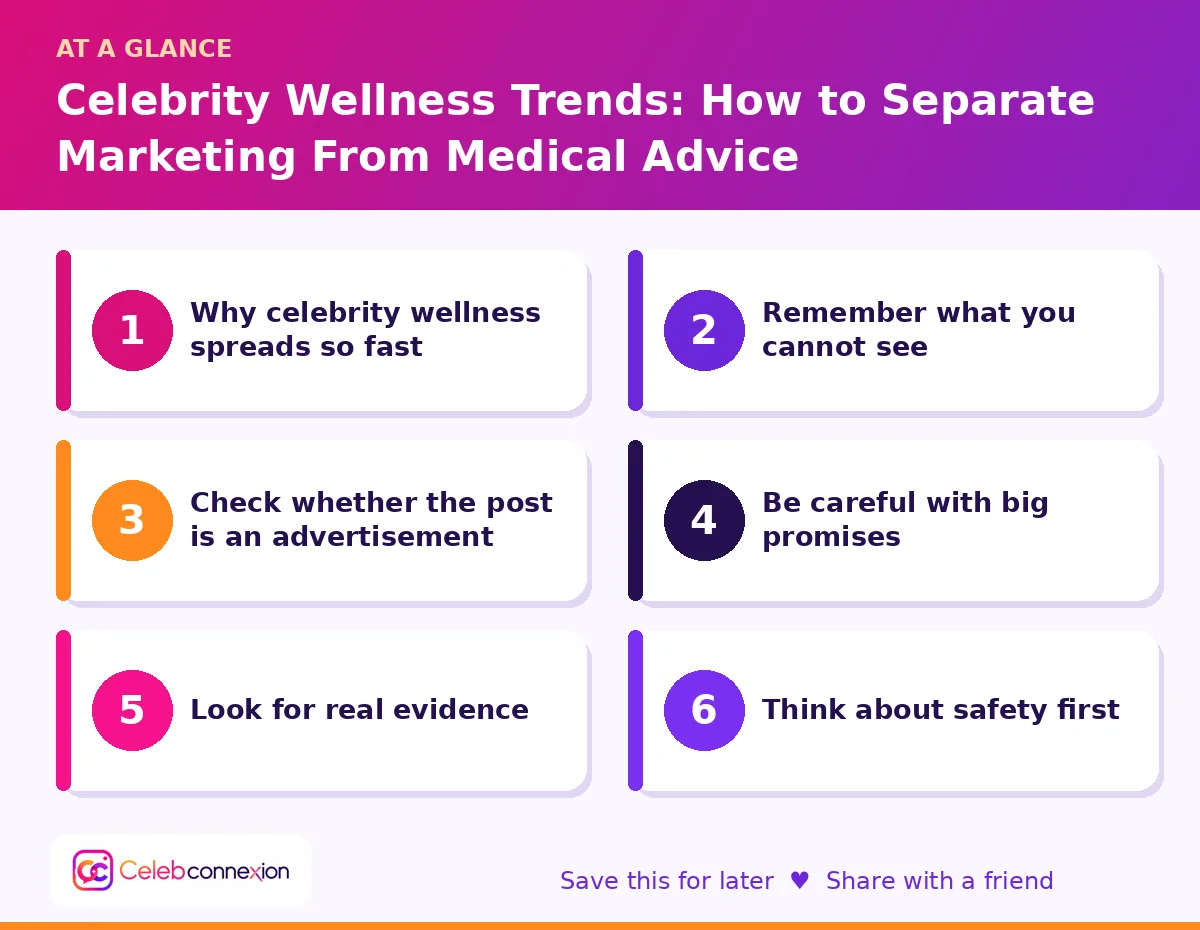
Why celebrity wellness spreads so fast
Public figures have large audiences, polished visuals and persuasive stories. A before-and-after photo or a heartfelt caption can feel more convincing than a scientific paper. Platforms also reward emotional, shareable content. When a trend carries a famous name, people copy it quickly, often without asking who benefits from the advice.
Remember what you cannot see
A celebrity’s appearance may reflect many things you do not see: genetics, professional trainers, chefs, sleep schedules, lighting, editing, and in some cases medical treatments or recovery support. A single product or habit is rarely the full explanation. Your life, health history and budget are different, so a routine that suits one person may not suit you.
Check whether the post is an advertisement
Look for labels such as “ad”, “sponsored” or “paid partnership”. Even without a label, ask whether the person sells a product, earns commissions or works with the brand. A paid relationship does not automatically make a claim false, but it explains why the message is enthusiastic and why important downsides may be missing.
Be careful with big promises
Warning words include “detox”, “miracle”, “melt fat fast”, “cure” and “secret”. Your liver and kidneys already handle detoxification, and healthy changes usually take time. Be sceptical of anything that promises dramatic results quickly or claims to treat many unrelated problems. Genuine health advice usually mentions limits, side effects and who should avoid it.
Look for real evidence
Ask where the claim comes from. Is there research in reputable journals, or only testimonials? Is the study on humans, with enough participants, and did it study the same product at the same dose? Health organisations, government health portals and registered professionals are more reliable than influencer posts. If you cannot find independent support, treat the claim as unproven.
Think about safety first
Extreme diets, long fasts, heavy supplement stacks and intense workouts can cause problems, especially for people with medical conditions, pregnancy, eating disorders or those taking medication. Supplements are not always tested the way medicines are, and product quality can vary. Speak with a doctor before starting anything that changes your diet drastically or involves new supplements.
Notice how the advice makes you feel
Healthy routines should leave you with more energy and less stress over time. If a trend makes you feel guilty, obsessed with numbers or afraid of normal food, step back. Comparing yourself with edited images can harm self-esteem. If you struggle with body image or eating habits, reaching out to a mental health professional is a sign of strength.
What actually works for most people
The basics are rarely glamorous: regular movement you enjoy, balanced meals with enough protein and vegetables, adequate water, good sleep, stress management and regular medical check-ups. These habits are more useful than any single trending product, and you can start them today without spending much.
A quick checklist before you try a trend
Ask who is selling it, what the evidence is, what could go wrong, whether it fits your health needs and whether you could sustain it for months. If you cannot answer, pause and speak to a professional.
🎯 The bottom line
Celebrity wellness content can be inspiring, but inspiration is not evidence. By checking for advertising, demanding proof, prioritising safety and focusing on sustainable basics, you can enjoy the motivation without falling for the hype. Your health is too important to outsource to a viral caption.
## Frequently asked questions
Are all celebrity wellness tips bad? No. Some are sensible habits, such as walking, sleep and balanced eating. The problem lies with extreme claims and paid promotion without clear disclosure.
Do detox products work? Healthy kidneys and liver already remove waste. Products promising dramatic cleansing are generally unsupported, so check with a doctor before using them.
Who should I ask for diet advice? A registered dietitian or qualified doctor who can consider your health history, rather than a social media post.