
Bollywood 📖 4 min read
For many years, “Bollywood” was treated as the face of Indian cinema. Today, audiences across the country and beyond are watching films in Telugu, Tamil, Malayalam, Kannada, Bengali, Marathi and many other languages. This growth is influencing how Hindi films are written, marketed and released. Here is a closer look at why regional cinema matters.
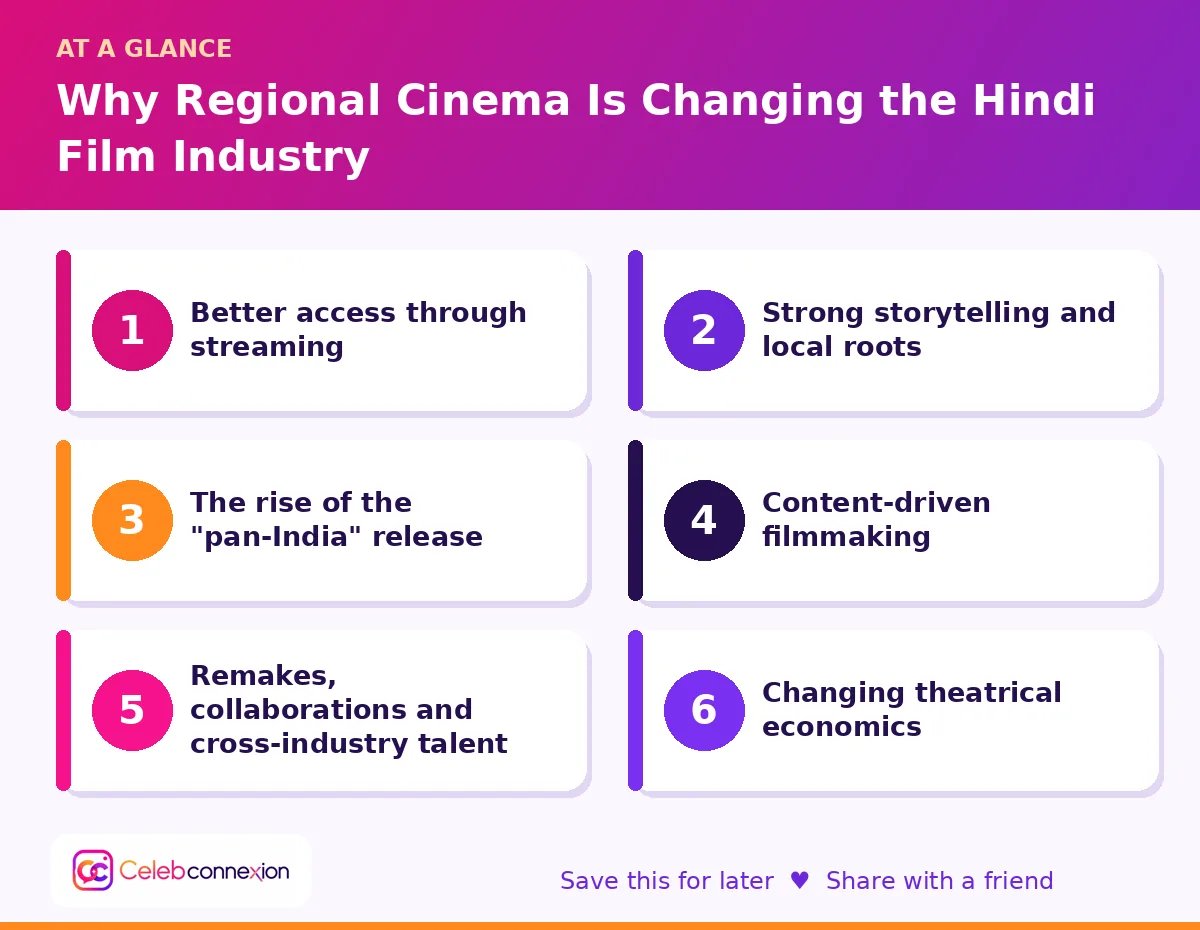
Better access through streaming
The biggest change is access. Streaming platforms with subtitles and dubbing allow viewers to watch films from any region at home. Someone in Delhi can watch a Malayalam thriller, and someone in Kolkata can enjoy a Marathi drama. Exposure builds curiosity, and curiosity leads to larger audiences for regional films in theatres too.
Strong storytelling and local roots
Many regional films succeed because they are deeply rooted in local culture while telling stories with universal emotions. Realistic characters, specific settings and fresh narratives make audiences feel they are seeing something new. Filmmakers have shown that a story set in a small town with local dialect can connect with viewers far away.
The rise of the “pan-India” release
Producers increasingly release one film in several languages at the same time, either by dubbing or shooting multiple versions. This approach widens the market and lets stars reach new audiences. It also requires careful marketing, since promotion has to feel natural in each language. When it works, a film can build a national following in a single release.
Content-driven filmmaking
Some regional industries are known for productions where the script leads and the budget is controlled. Audiences have rewarded such films, which has encouraged writers and directors everywhere to focus on strong screenplays. Hindi filmmakers have taken note and are paying more attention to story development, character depth and technical quality.
Remakes, collaborations and cross-industry talent
Hindi remakes of regional hits have been common for years, though mixed results show that simply translating a film is not enough. Increasingly, talent moves across industries. Actors, directors, music composers and technicians collaborate on projects in different languages. These partnerships bring new styles and techniques into each other’s work.
Changing theatrical economics
Regional films often perform strongly in their home markets, and some also earn well from overseas communities. This shows exhibitors that diverse content can fill theatres. Multiplex programming now includes more languages, giving viewers more choice and encouraging producers to take creative risks.
Challenges that remain
Dubbing quality, cultural nuance and distribution gaps can limit reach. Not every regional film travels well, and marketing budgets differ across industries. There is also a risk that the term “pan-India” becomes a marketing label rather than a creative goal. Success still depends on a story that audiences care about.
What it means for Hindi cinema
Competition is making the industry more ambitious. Hindi films now experiment more with genre, subject matter and technical scale. Producers are also more open to collaborating with regional talent and releasing films in multiple languages. Healthy competition benefits audiences, who get more variety.
How you can explore regional cinema
Start with highly rated films on streaming platforms and use subtitles. Follow film festivals and critics who cover several industries. Try different genres, from thrillers to family dramas. Discovering a new language of storytelling can be one of the most rewarding parts of being a movie fan.
💬 Frequently asked questions
⭐ Key takeaways
- Streaming with subtitles and dubbing has removed the language barrier and created national audiences for regional films.
- Strong scripts, local authenticity and controlled budgets have made content-driven filmmaking a model for the whole industry.
- Pan-India releases need careful marketing, because a film must feel natural in every language it speaks.
- The healthiest outcome is more variety for viewers, not one industry replacing another.
🎯 The bottom line
Regional cinema is not replacing Hindi films, but it is raising the bar and widening the conversation. As audiences embrace stories from across the country, Indian cinema as a whole becomes richer, more diverse and more exciting.