
OTT & Web 📖 4 min read
Behind every episode you stream lies months of work by hundreds of people. A web series is built in stages, each with its own challenges. Whether you are a fan curious about the process or an aspiring filmmaker, this guide explains how a series travels from an idea to your screen.
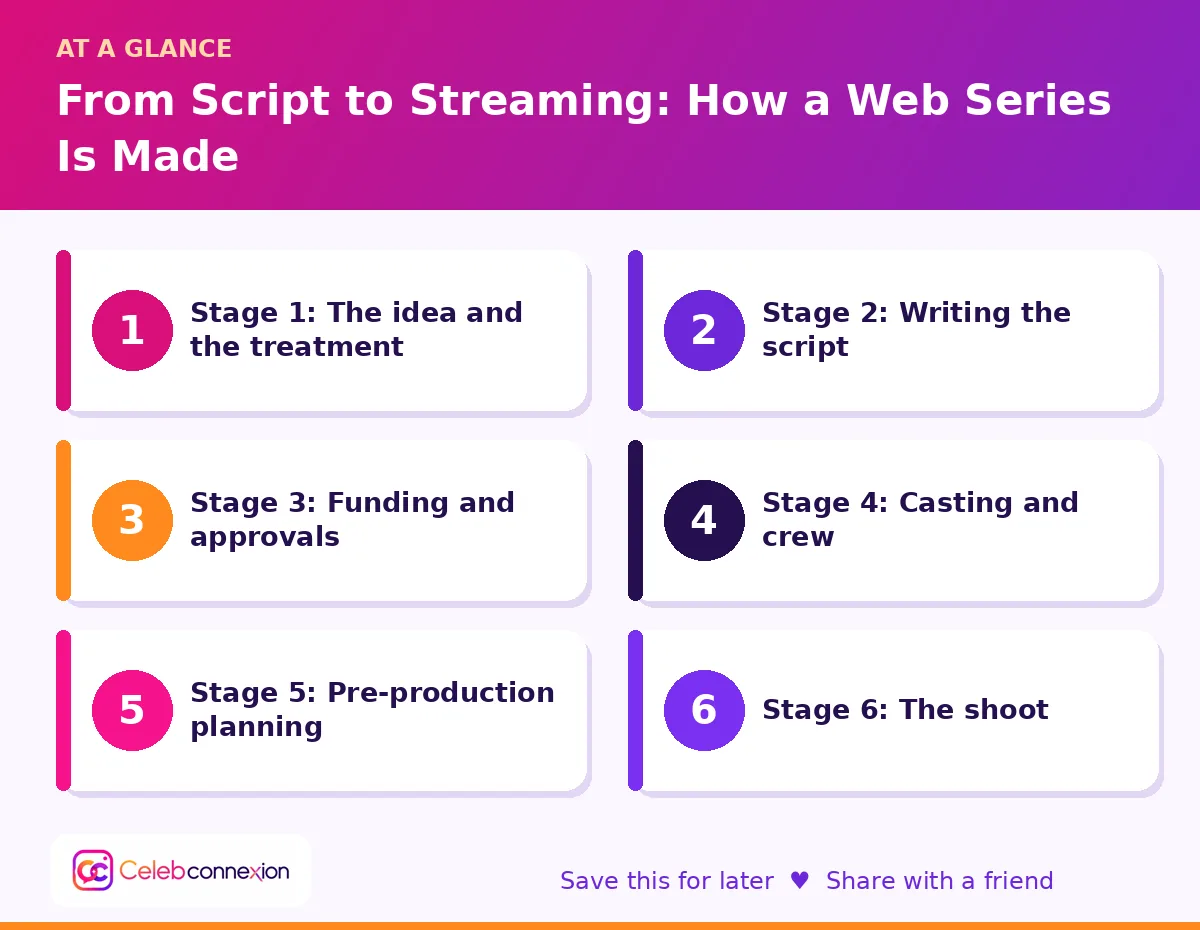
Stage 1: The idea and the treatment
Everything begins with a concept: a character, a world or a question. The writer develops a treatment, which summarises the story, the main characters and the way the series might unfold across episodes. At this stage the team decides the genre, tone and approximate number of episodes.
Stage 2: Writing the script
Writers create a series bible, episode outlines and full scripts. In a writers’ room, several people may work together, discussing character arcs and plot twists. Scripts go through many drafts to improve dialogue, pacing and clarity. Good planning here saves time and money later.
Stage 3: Funding and approvals
Producers prepare budgets, schedules and pitch decks, then seek financing from a platform, studio or investors. Legal teams check rights and contracts. Once funding and approvals are in place, pre-production can begin.
Stage 4: Casting and crew
Casting directors audition actors for each role, looking for performers who match the characters and have chemistry with each other. At the same time, producers hire the director, cinematographer, production designer, costume designer, sound team and other crew. Choosing the right people shapes the look and feel of the series.
Stage 5: Pre-production planning
This stage covers location scouting, set design, costume fittings, rehearsals and detailed shooting schedules. A schedule is often arranged by location and cast availability rather than story order, which means scenes may be shot out of sequence. Safety planning, permissions and insurance are also arranged.
Stage 6: The shoot
During filming, the director guides performances while the camera and lighting teams capture each scene. Sound recordists capture dialogue and ambient noise. Daily call sheets keep everyone informed. Shoots can last weeks or months, with long days and constant problem-solving, from weather to equipment issues.
Stage 7: Editing and post-production
Editors assemble the footage into episodes, selecting the best takes and shaping the story’s rhythm. Colourists adjust the look of the images. Sound designers add effects and mix dialogue, while composers create background music. Visual effects artists add elements that could not be filmed. Subtitles and dubbing are prepared as needed.
Stage 8: Quality checks and delivery
Before release, episodes go through technical checks for picture, sound and accessibility. Platforms require specific file formats and metadata. Artwork, trailers and descriptions are created. Legal and certification requirements are completed according to the rules that apply.
Stage 9: Marketing and release
The marketing team announces the series with posters, teasers and trailers, then schedules the release. Some shows launch all episodes at once, while others release weekly. After launch, the team monitors audience response and may adjust promotion.
Tips for aspiring creators
Start small with a short film or a three-episode pilot. Keep your story focused and your budget realistic. Build a team that shares your vision, and write contracts or agreements even for small projects. Learn basic sound, because poor audio ruins good visuals. Finally, finish what you start; completed projects teach more than unfinished ideas.
💬 Frequently asked questions
⭐ Key takeaways
- Every series moves from idea and script to funding, casting, shooting, editing and release.
- Pre-production planning saves money, so schedules and locations are decided before cameras roll.
- Sound and editing shape the viewing experience as much as the visuals.
- Aspiring creators can start with a short pilot using simple equipment and a focused story.
🎯 The bottom line
A web series is a team effort that turns imagination into episodes through careful planning, creativity and persistence. Knowing the steps makes you a more appreciative viewer and gives aspiring makers a roadmap to follow.