
Brand Collabs 📖 4 min read
One of the hardest questions for new creators is how much to charge. Quote too high and brands may walk away; quote too low and you may feel undervalued and overworked. There is no universal price list, but there are clear factors and methods that can guide you. This guide explains how to think about pricing and build a rate card you can use with confidence.
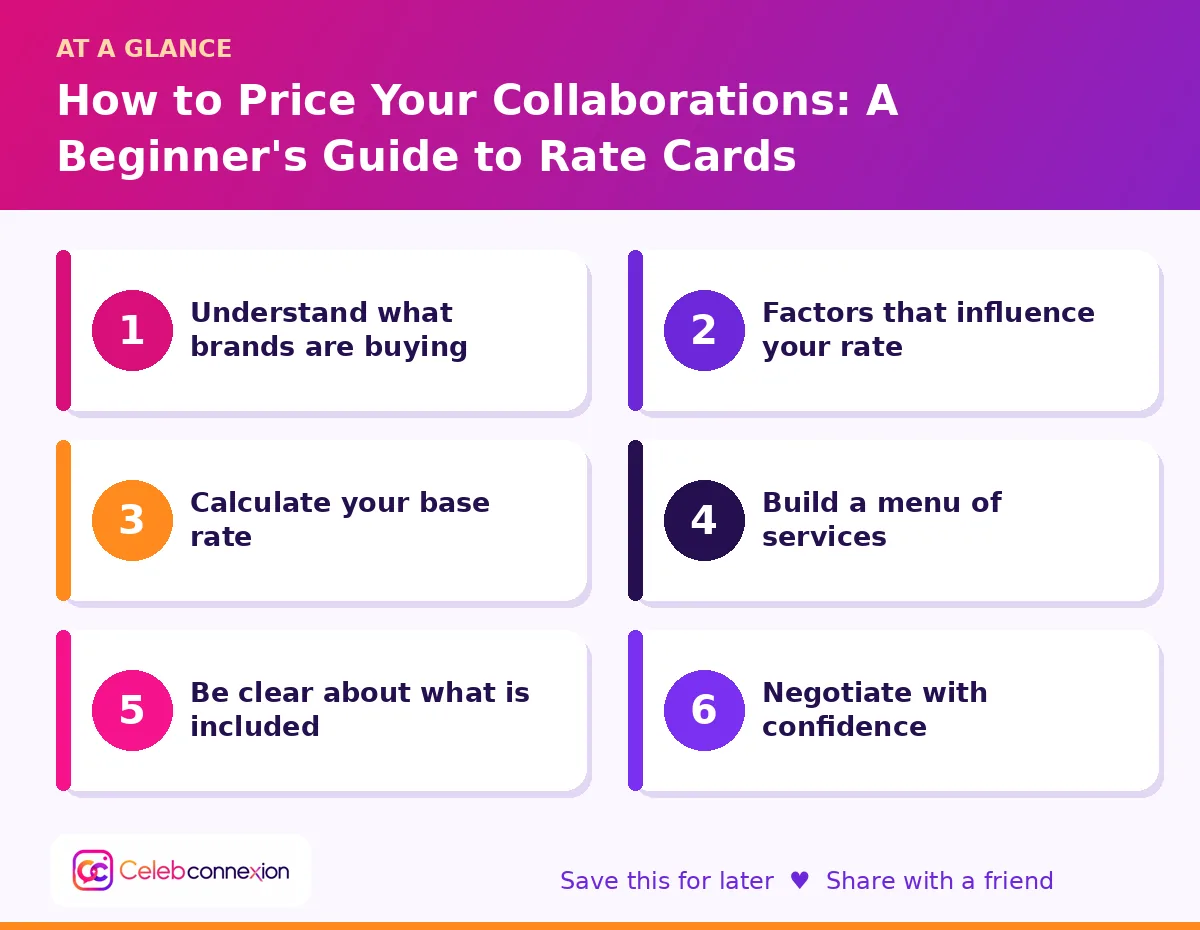
Understand what brands are buying
A brand is not just buying a post. It is paying for your creativity, your audience’s attention, the time you spend and sometimes the right to reuse your content. Thinking in terms of value helps you explain your price instead of simply stating a number.
Factors that influence your rate
Reach and engagement come first. The number of people who see your content and how they respond shows its potential impact. The type of deliverable matters too, since a long video takes more effort than a single story. Production effort, including scripting, filming and editing, adds to the cost. Usage rights are another factor. If the brand wants to run your content as ads or use it on its website, the price should reflect that. Exclusivity, which stops you from working with competitors for a period, also increases the rate. Finally, deadlines and revisions affect your workload.
Calculate your base rate
Start by estimating the hours you spend on one piece of content, from planning to editing and posting. Decide how much you want to earn per hour, and add costs such as equipment, software and taxes. This calculation gives a minimum you should not go below. Then consider market value by talking to fellow creators, joining communities and reviewing guidance from agencies.
Build a menu of services
A rate card lists your services and prices. It may include a single post, a short video, a set of stories, a long-form video, a bundle of several deliverables and add-ons such as extra usage rights or fast delivery. Offering packages helps brands choose according to their budgets, and bundles can increase the total value of the deal.
Be clear about what is included
Specify the number of revisions, delivery timelines, platforms and duration for which the content stays live. State whether music licences, props or product shipping are included. Clear terms prevent misunderstandings and protect your time.
Negotiate with confidence
Prepare to discuss your numbers. If a brand has a smaller budget, consider reducing the scope rather than lowering the price. You might offer fewer deliverables or shorter usage rights. If you agree to a lower rate for a promising long-term partnership, document the terms and plan to review the rate in future.
Consider payment terms
Agree on how and when you will be paid. Common arrangements include an advance before work begins and the balance after delivery. Clarify the invoice process and payment timeline. Keep written records of all agreements.
Know when to say no
Some opportunities are not worth the price. If a brand asks for unlimited usage or heavy revisions for little money, politely decline or propose changes. Saying no protects your brand and ensures you have time for better partnerships.
Review and update your rates
As your audience grows and your skills improve, increase your prices. Review your rate card every few months. Keep track of the results of past campaigns so you can show evidence of value.
Be aware of taxes and legal matters
Income from collaborations may have tax implications. Consider consulting a qualified accountant for guidance. Contracts and invoices should be properly maintained.
💬 Frequently asked questions
⭐ Key takeaways
- Price the value you deliver, which includes reach, effort, usage rights, exclusivity and deadlines, not just a single post.
- Calculate your minimum from time spent and costs, then compare with what similar creators charge.
- Package services into a flexible rate card, and reduce scope instead of dropping your price when budgets are tight.
- Put revisions, timelines and payment terms in writing, and review your rates every few months.
🎯 The bottom line
Pricing is a mix of data, confidence and clear communication. Understand the value you provide, calculate your minimum, create a flexible rate card and review it regularly. Fair pricing builds respect and sustainable partnerships.