
Gossip 📖 4 min read
A single unverified post about a famous person can travel across the internet in minutes. By the time a correction appears, many people have already seen and shared the original. Understanding how rumours spread helps us recognise the patterns and slow them down. This article explains the main factors in simple terms.
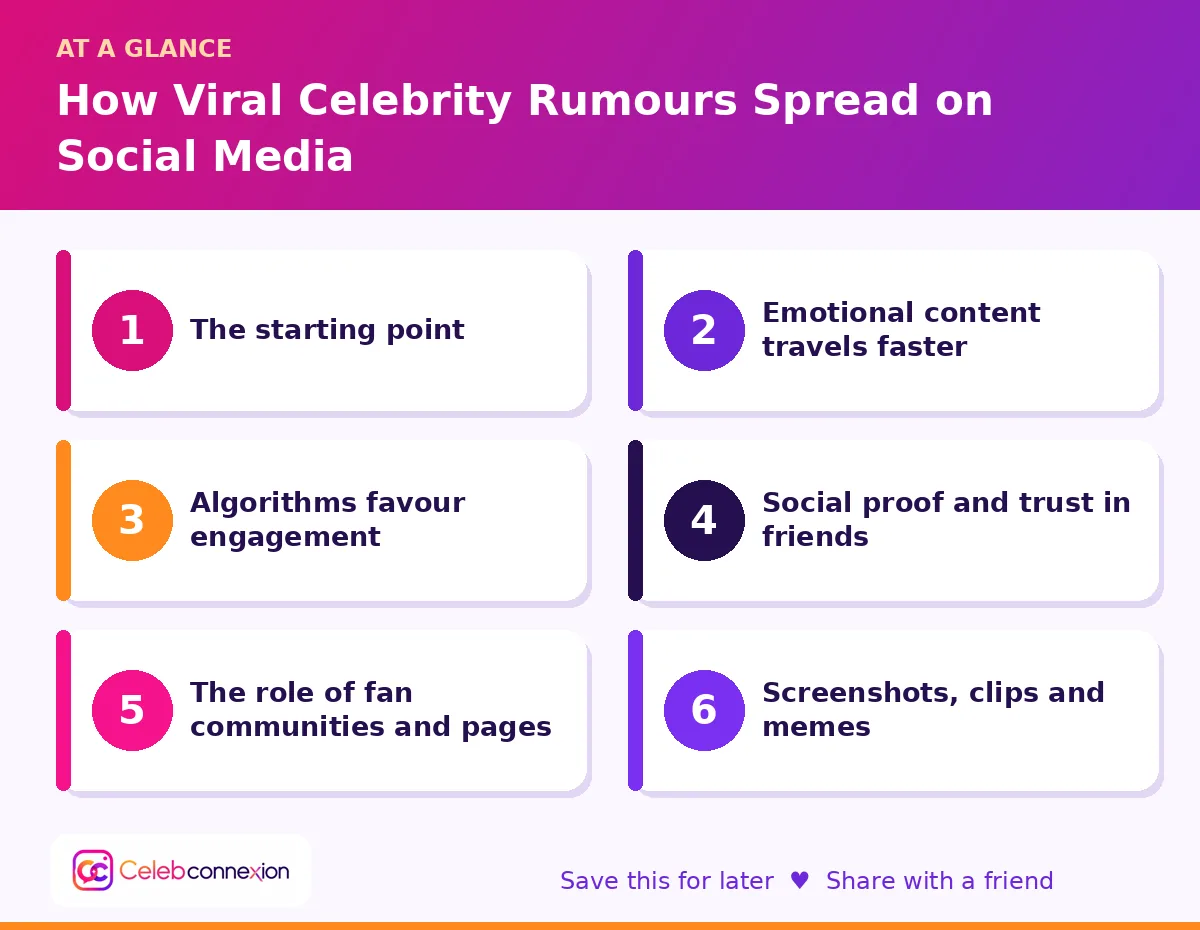
The starting point
Rumours may begin with a misunderstood event, an anonymous claim, an edited image, a joke taken seriously or a deliberate attempt to attract clicks. Some start innocently, while others are created to mislead. Once a rumour is posted, the sharing habits of audiences determine how far it goes.
Emotional content travels faster
Posts that trigger strong emotions, such as surprise, anger, sympathy or excitement, tend to be shared more. Rumours about scandal and drama are naturally emotional. People often share to express feelings or to warn others, without checking the facts first.
Algorithms favour engagement
Social platforms aim to show content that keeps users interacting. When many people react to a post, systems may show it to more people. A controversial claim that creates arguments can therefore receive more reach than a calm, accurate correction. This does not mean platforms intend to spread falsehoods, but engagement-based ranking can amplify them.
Social proof and trust in friends
We tend to trust information that comes from people we know. If friends or family share a story, it feels more credible, even if the original source is unknown. Seeing many likes and shares also gives the impression that others have verified the content.
The role of fan communities and pages
Large fan pages, meme accounts and entertainment pages can accelerate spread because they have big audiences. Some of them share quickly to gain attention. When a rumour appears on several pages, it can look like confirmation, though they may all be copying one another.
Screenshots, clips and memes
Visual content is easy to consume and share. A cropped image or clip can lose context, changing its meaning. Memes may turn a rumour into a joke, which spreads it further even among people who do not fully believe it.
Why corrections struggle
Corrections are often less exciting than the original claim. They may reach fewer people, and some audiences do not want to give up a story they have already enjoyed or discussed. People may also distrust the source of the correction. Timing matters too: the first version of a story leaves a strong impression.
Messaging apps and private groups
Forwarded messages in private groups are difficult to track and correct. A rumour can circulate for days among family and friends without being seen by fact-checkers. Features that label forwarded messages help, but the habit of verifying before forwarding is more important.
How to slow the spread
Pause before sharing and ask whether the source is trustworthy. Search for confirmation. Do not comment angrily on a doubtful post, because that can boost it. Instead, report misleading content when platforms allow. If you shared something false, delete it and tell others. Share accurate information from reliable sources when a rumour has been disproved.
What platforms and publishers can do
Platforms can improve labels, reduce the reach of repeatedly disproved claims and support fact-checking partnerships. Publishers can avoid sensational headlines and verify before publishing. Public figures and their teams can respond quickly with clear statements when necessary.
💬 Frequently asked questions
⭐ Key takeaways
- Emotional, surprising claims spread faster than careful corrections.
- Engagement-based ranking can amplify controversial posts, even when they are false.
- Friends sharing a post make it feel trustworthy, so verify before you forward.
- Reporting misleading content and sharing reliable corrections helps slow the spread.
🎯 The bottom line
Rumours travel on emotion, trust and the design of social platforms. By understanding the process, each of us can become a gatekeeper rather than an amplifier. A moment of care before pressing share can protect real people from real harm.