Brand Collabs 📖 4 min read
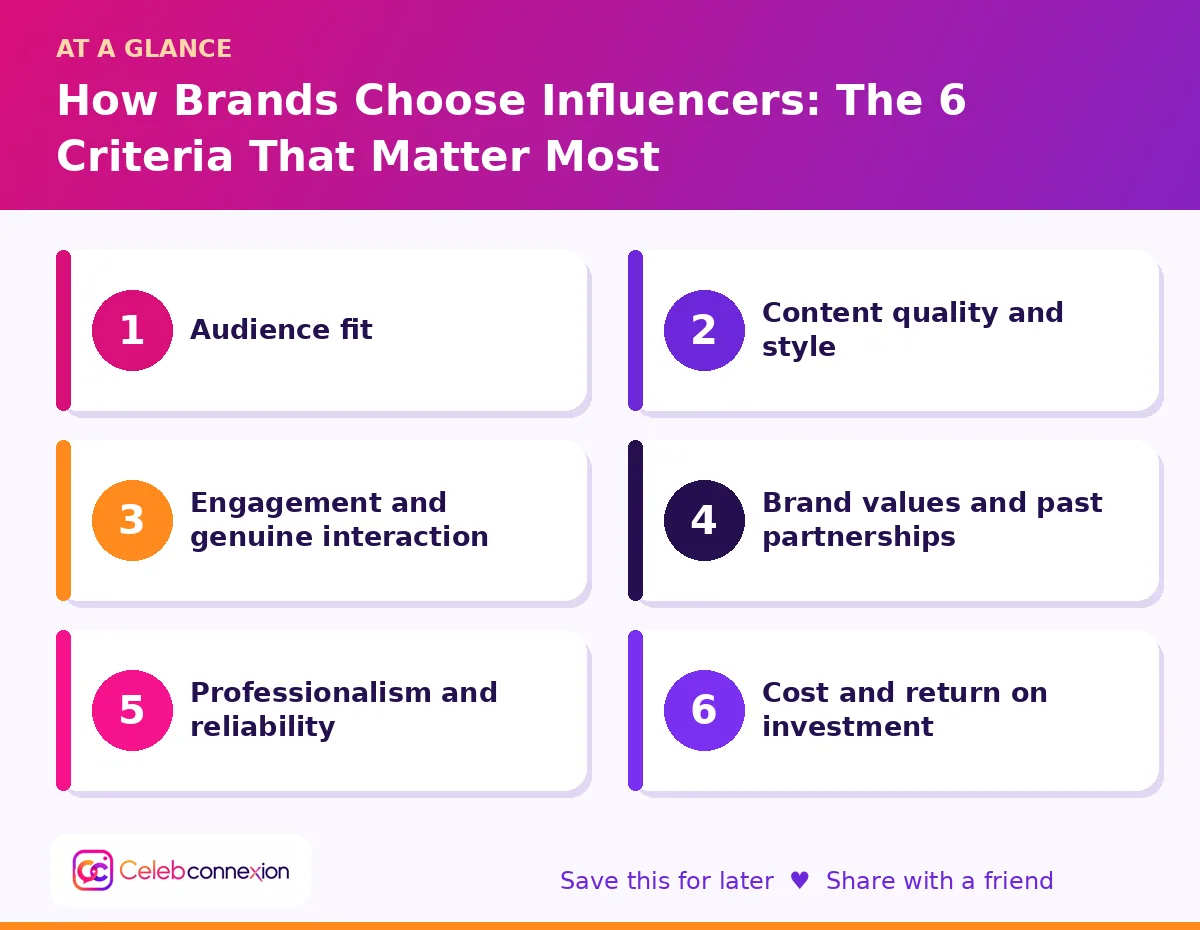
Creators often wonder why one brand picked a particular influencer while another was ignored. The answer is rarely just follower count. Marketing teams evaluate several factors before sending a proposal. Knowing these criteria helps creators improve their profiles and helps small brands run smarter campaigns. Here are the six that matter most.
1. Audience fit
The first question is whether your followers are the people the brand wants to reach. A skincare company for young adults looks for creators whose audience is mostly in that age group and interested in beauty. Demographics such as age, location, language and interests matter. A smaller but relevant audience is usually more valuable than a large, mixed one.
2. Content quality and style
Brands review your recent posts to judge visuals, storytelling, editing and tone. They want content that looks professional enough to represent their product while remaining authentic to your voice. Consistent quality, clear audio and a recognisable style signal reliability. You do not need expensive gear, but your content should be tidy and thoughtful.
3. Engagement and genuine interaction
Marketers look beyond likes. They read comments to see whether followers ask questions, share opinions and trust the creator. They check how you respond to your community. Strong engagement suggests that your audience pays attention. Sudden spikes that do not match your usual patterns may raise questions about authenticity.
4. Brand values and past partnerships
Brands consider whether your values align with theirs. They check your history for controversial statements or partnerships that conflict with their message. They also notice if your feed is crowded with promotions, which can reduce the impact of a new campaign. A balanced mix of organic and sponsored content looks healthier.
5. Professionalism and reliability
A creator who replies promptly, meets deadlines, follows briefs and communicates clearly is easy to work with. Brands value this highly, because campaigns involve schedules, approvals and legal requirements. Having a media kit, a clear process and a polite tone helps you stand out.
6. Cost and return on investment
Finally, the brand weighs your fee against expected results. Results may include views, clicks, sales, sign-ups or content that the brand can reuse. A fair rate that matches your reach and workload makes it easier to agree. Offering flexible packages, such as a combination of video and stories, can help brands with different budgets.
Other factors that influence decisions
Location can matter for local businesses. Language skills help regional campaigns. Platform presence matters, since a brand may prefer short videos or long-form tutorials. Some brands also consider whether the creator has experience with disclosure rules and ethical promotion.
Red flags brands try to avoid
Fake followers, bought engagement, copied content, unclear disclosure of paid posts and unprofessional communication are major warning signs. Brands may also avoid creators who post harmful or misleading content. Protecting your reputation is therefore a long-term investment.
How creators can improve their chances
Choose a clear niche. Keep your profile updated with a professional bio and contact email. Create a media kit with real analytics. Collaborate with smaller brands to build a portfolio. Treat each partnership as a chance to deliver beyond expectations and ask for testimonials.
How small brands can use these criteria
If you run a small business, create a simple checklist with these six points. Review a creator’s last twenty posts, read their comments and ask for audience data. Start with a small pilot campaign before committing to a larger one, and write down expectations clearly.
💬 Frequently asked questions
⭐ Key takeaways
- Audience fit comes first: a smaller, relevant audience often beats a larger, mixed one.
- Content quality, engagement and honest interaction show whether followers actually trust you.
- Professional behaviour, such as quick replies and met deadlines, can win repeat work.
- Fake followers, unclear disclosure and unprofessional communication are the most common red flags.
🎯 The bottom line
Brands choose creators who combine relevance, quality, trust and professionalism at a fair price. Focus on building these strengths, and the right opportunities are more likely to find you. Collaboration works best when both sides see real value.