Brand Collabs 📖 4 min read
Excited about a new brand partnership, it is easy to reply “yes” and start creating. But a collaboration is a business relationship, and a written agreement protects both sides. Contracts can look complicated, yet understanding a few key clauses makes them much less intimidating. This article offers general information to help you ask the right questions. It is not legal advice, so consult a qualified lawyer for important or high-value agreements.
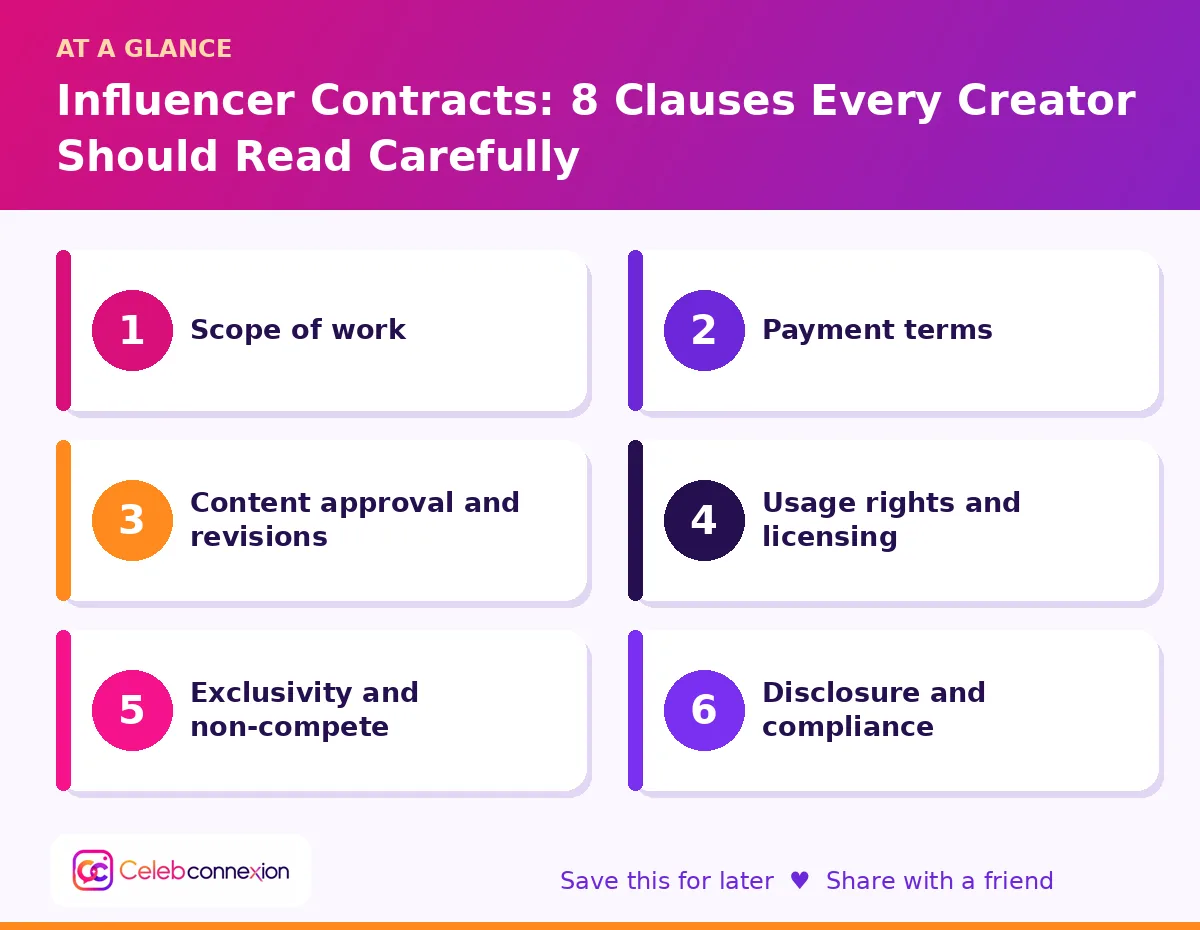
1. Scope of work
This section lists what you must deliver: the number and type of posts or videos, platforms, formats, length, posting dates and any required hashtags or tags. Make sure it matches what you discussed. Vague wording such as “content as needed” can lead to extra work without extra pay.
2. Payment terms
Check the total fee, payment schedule, invoice requirements and deadlines. Look for details about advances, milestone payments and what happens if payments are late. Confirm currency, taxes and any deductions. If payment depends on performance, such as sales or views, ensure the formula is clear.
3. Content approval and revisions
Many brands review drafts before posting. The contract should state how many revisions are included, how quickly the brand must respond and what happens if approval is delayed. Without limits, a campaign can stretch endlessly, so seek clear timelines.
4. Usage rights and licensing
This clause defines how the brand can use your content. Can they repost it on their own pages? Can they run it as paid ads? For how long, in which regions and on which platforms? Broader usage is more valuable to the brand, so it should usually be reflected in your fee. Also check who owns the original content after the campaign.
5. Exclusivity and non-compete
Exclusivity prevents you from working with competitors for a set period. Look closely at how a competitor is defined, how long the restriction lasts and whether it limits your income. Exclusivity should be compensated, and the scope should be reasonable.
6. Disclosure and compliance
Contracts often require you to label sponsored content clearly according to advertising guidelines. Make sure you understand what is required and that the brand does not ask you to hide the partnership. Accurate claims are also important: do not make statements about a product that you cannot support.
7. Termination and cancellation
Find out what happens if either side wants to end the agreement. Are there notice periods? Will you be paid for work already done? What if the brand cancels a campaign after you have produced content? Clear terms protect your time and effort.
8. Liability, indemnity and confidentiality
These sections explain who is responsible if something goes wrong, such as a legal claim related to the product or content. Some contracts ask creators to take on broad responsibility. Confidentiality clauses may limit what you can share about the project. Read these carefully, and seek advice if language seems unusually heavy.
Additional points to check
Look at the governing law and where disputes would be resolved. Check whether the contract mentions morality or conduct clauses, which allow termination if your behaviour harms the brand’s reputation. Ensure any promises made verbally are also included in writing.
Practical tips
Never ignore a contract just because it is long. Ask questions and request changes politely. Keep copies of all signed documents and emails. Do not start work before the agreement is finalised. For long-term or high-value deals, a lawyer can review the terms.
💬 Frequently asked questions
⭐ Key takeaways
- Check scope, payment dates and revision limits so the work you agree to matches the money you receive.
- Usage rights and exclusivity change the value of a deal, so they should be reflected in your fee.
- Understand termination, liability and disclosure clauses before you sign anything.
- For larger deals, a qualified lawyer’s review is a worthwhile investment.
🎯 The bottom line
A contract is a tool for clarity, not a sign of mistrust. By reading the key clauses carefully, asking questions and seeking professional help when needed, you protect your work and build healthier partnerships with brands.