
Bollywood 📖 4 min read
Every Friday, headlines announce how much a new Hindi film has “earned”. Look closer and you will see words like gross, nett, opening, lifetime and verdict. These terms sound simple, yet they are often misunderstood, which is why two reports about the same film can show different numbers. This beginner-friendly guide explains the most common box office terms so you can read trade reports like a pro.
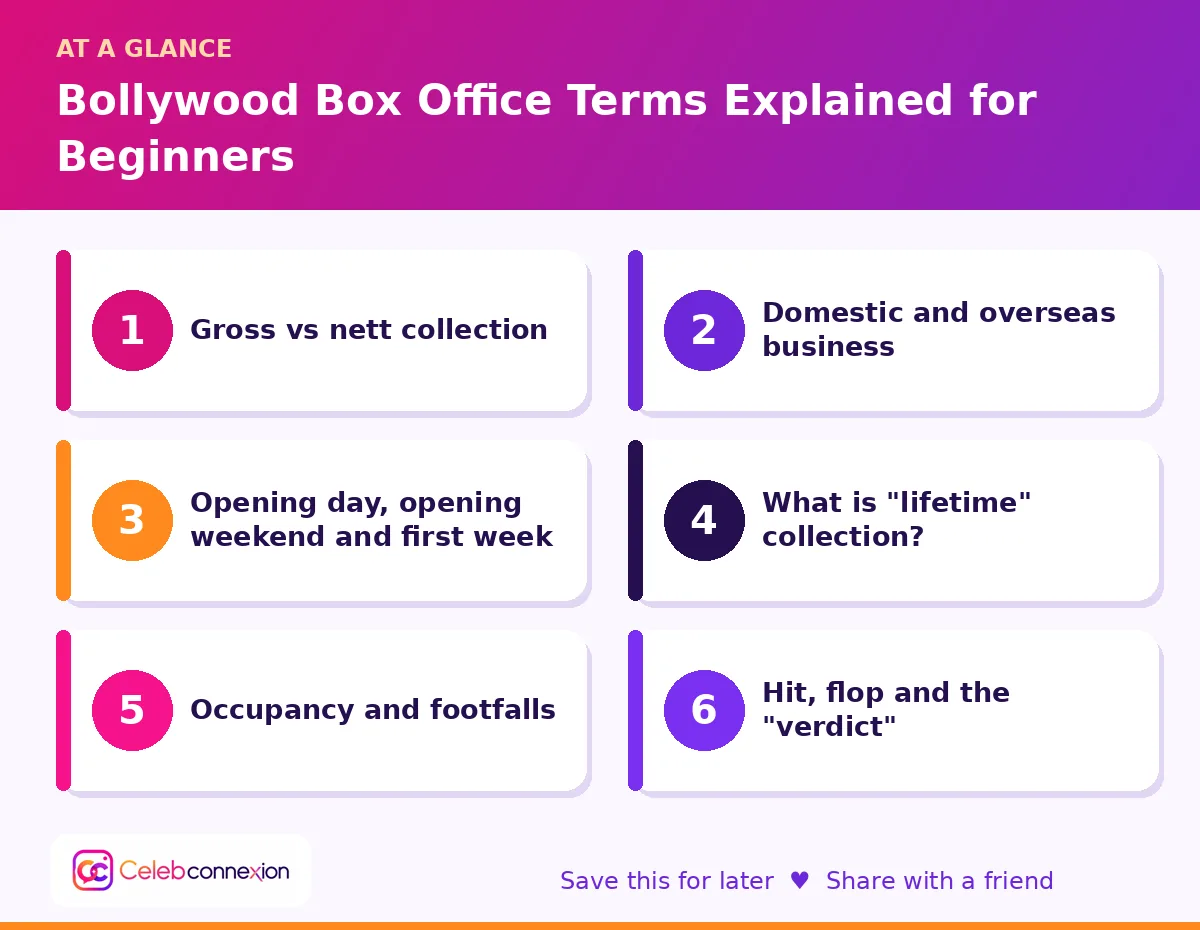
Gross vs nett collection
Gross collection is the total amount paid by audiences for tickets, including taxes and other charges. Nett collection is what remains after taxes are removed. Trade reports in India often quote nett figures for domestic business because it gives a more realistic idea of what the film industry actually receives. If you see a number labelled “gross”, expect it to be higher than the nett figure for the same film.
Domestic and overseas business
Domestic collection means earnings from cinemas within India, while overseas or international collection covers other countries. Many films also report a “worldwide” figure, which adds the two together. Overseas markets such as North America, the Middle East, the United Kingdom and Australia can be important for certain films, especially those with strong appeal among Indian communities abroad.
Opening day, opening weekend and first week
Opening day is the first day’s collection and works as an early sign of audience interest. The opening weekend adds Saturday and Sunday and shows whether word of mouth is helping or hurting. The first week covers seven days and gives a better picture, because the second Friday often brings new releases that take away screens. A big opening followed by a steep drop suggests audiences did not love the film, while a smaller opening with steady growth shows strong word of mouth.
What is “lifetime” collection?
Lifetime refers to the total earnings of a film across its entire theatrical run. Because films keep earning for weeks, the final figure is usually known only after the run ends. Be careful with early “projections” and “estimates”, which are guesses made before full data arrives and may be revised.
Occupancy and footfalls
Occupancy is the percentage of seats filled during shows. A film can have high occupancy in small screens but a low total if it has few shows. Footfalls count how many people bought tickets. Footfalls are useful for comparing films across years, because ticket prices change over time and money alone can mislead.
Hit, flop and the “verdict”
The verdict is the trade’s judgement of a film’s commercial performance. It is not about quality but about whether the film recovered its costs relative to expectations. Terms like “hit”, “super hit” and “flop” depend on the film’s budget, marketing costs and how much the producer earned from other rights. A modest film with a low budget can be a hit with a smaller collection than a big-budget film that earns more but not enough.
Distributor share and where the money goes
The money paid at the ticket counter does not go entirely to the producer. Cinemas keep a share, distributors take their cut and the producer receives the rest. The exact split varies by film, week and agreement, so the figure the public sees is not the producer’s profit. That is one reason trade analysts talk about “producer share” or “recovery”.
Other income sources
Modern films earn from more than tickets. Satellite television rights, streaming platform deals, music rights, overseas distribution and brand partnerships can contribute significantly before a film even releases. Sometimes a film is considered safe because these rights covered most of the cost. Others depend heavily on theatrical business.
How to read collection reports wisely
Check whether the figure is gross or nett and domestic or worldwide. Note whether it is an estimate or confirmed data. Compare similar films, not just headline numbers. And remember that box office is only one measure; some films find larger audiences later on streaming.
💬 Frequently asked questions
🎯 The bottom line
Box office terms are less confusing once you know the basics. Look for the type of figure, the time period and the source before drawing conclusions. With these simple checks, every Friday’s collection report becomes easier to understand and far more interesting to follow.