
Bollywood 📖 3 min read
Hindi cinema has always been a mirror for style. Costumes on screen have introduced new silhouettes, colours and accessories to everyday wardrobes. By looking at broad eras, we can see how fashion in films reflected society, technology and changing tastes. This article gives a general overview rather than a strict timeline, because styles often overlap and return.
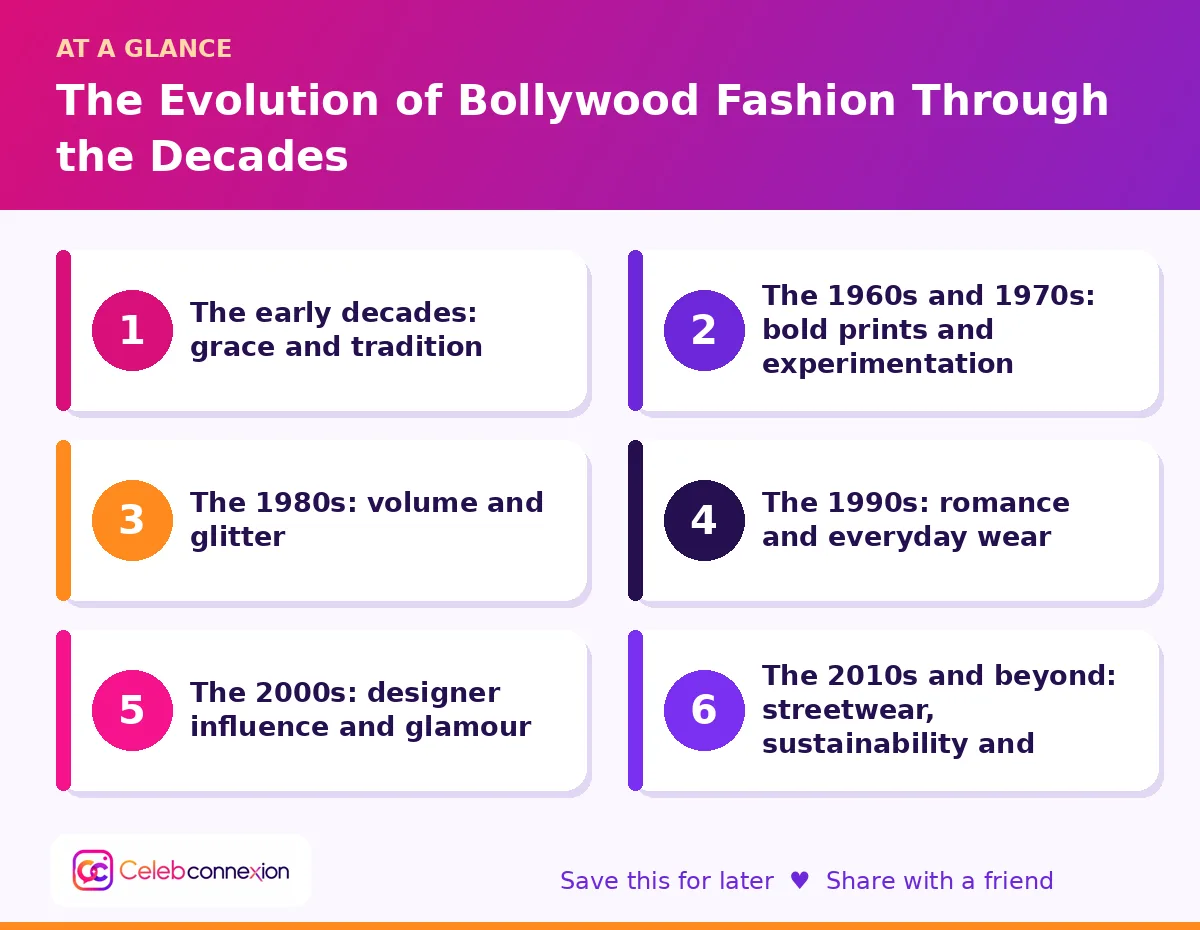
The early decades: grace and tradition
In the early years of Hindi cinema, costumes leaned towards elegance and tradition. Sarees, salwar suits and sherwanis were common, often in simple fabrics and classic drapes. Hairstyles such as neatly set waves and accessories like bindis and jhumkas became part of the look. The emphasis was on modesty, grace and storytelling through costume.
The 1960s and 1970s: bold prints and experimentation
Later decades brought more playful fashion. Bright colours, geometric prints and fitted silhouettes appeared alongside churidars, kurtas and tailored trousers. Bell-bottoms, wide collars, oversized sunglasses and statement hairstyles reflected global trends. Fashion on screen began to show youthfulness and rebellion, inspiring college wardrobes across the country.
The 1980s: volume and glitter
The 1980s are often remembered for shoulder pads, sequins, strong colours and layered accessories. Dance numbers favoured eye-catching, shimmering outfits that stood out on screen. Men’s fashion included jackets, bold knitwear and distinctive hairstyles. The era’s styling prioritised drama and visibility.
The 1990s: romance and everyday wear
Romantic films popularised relaxed, relatable clothing. Denim jackets, cotton kurtas, simple suits, polka-dot dresses and pastel colours became widely copied. Ethnic wear for festive scenes became more refined, and wedding looks, including lehengas, influenced real-life celebrations. The style felt aspirational yet attainable for many viewers.
The 2000s: designer influence and glamour
As film budgets grew and designers worked more closely with productions, costumes became more polished. Fashion labels collaborated on custom looks, and red-carpet appearances started influencing trends as much as films did. Low-rise silhouettes, fusion wear and statement jewellery became common. Costume designers were increasingly credited for their work.
The 2010s and beyond: streetwear, sustainability and individuality
More recent years brought athleisure, sneakers, relaxed tailoring and mix-and-match ethnic looks. Social media let stylists, actors and fans share outfits instantly, so trends spread faster than ever. There is also growing interest in handloom fabrics, regional textiles, upcycled clothing and inclusive sizing. Audiences now value individuality and authenticity over a single “look”.
What keeps coming back
Fashion often returns in cycles. Sarees continue to evolve, from classic drapes to pre-stitched and modern versions. Bold prints, vintage sunglasses and statement jewellery regularly reappear. Even when styles change, the love for colour and craft remains constant.
How films influence real wardrobes
When a character wears a memorable outfit, shoppers search for similar items. Local tailors and online stores quickly produce affordable versions. This influence is not limited to clothing: hairstyles, jewellery and even make-up trends spread through cinema.
Tips to borrow the look without copying it
Pick one inspired element, such as a print, a colour or an accessory, and combine it with items you already own. Choose comfortable fabrics suitable for your climate. Focus on fit, because well-fitted basic clothes look better than ill-fitting trendy ones. And think about the occasion before replicating a full costume.
💬 Frequently asked questions
⭐ Key takeaways
- Costumes on screen reflect the mood of each era, from elegant tradition to bold experimentation and today’s individuality.
- Fashion repeats in cycles, so vintage prints, sarees and statement accessories keep returning in fresh versions.
- Borrow one inspired element rather than a full costume, and prioritise fit, comfort and the occasion.
- Handloom, regional textiles and inclusive sizing show how the conversation around style continues to evolve.
🎯 The bottom line
Bollywood fashion is a story of changing times, told through fabric, colour and accessories. Studying these eras can inspire your own wardrobe choices while reminding us that great style is about confidence, comfort and a little creativity.