
Gossip 📖 4 min read
A shocking headline about a famous person appears in your feed. It looks real, friends are sharing it and the comments are heated. Within minutes, thousands of people believe it. Later, it turns out to be false. Fake celebrity rumours spread because they are emotional, surprising and easy to share. The good news is that a few quick habits can protect you from becoming part of the problem. Here is a practical checklist.
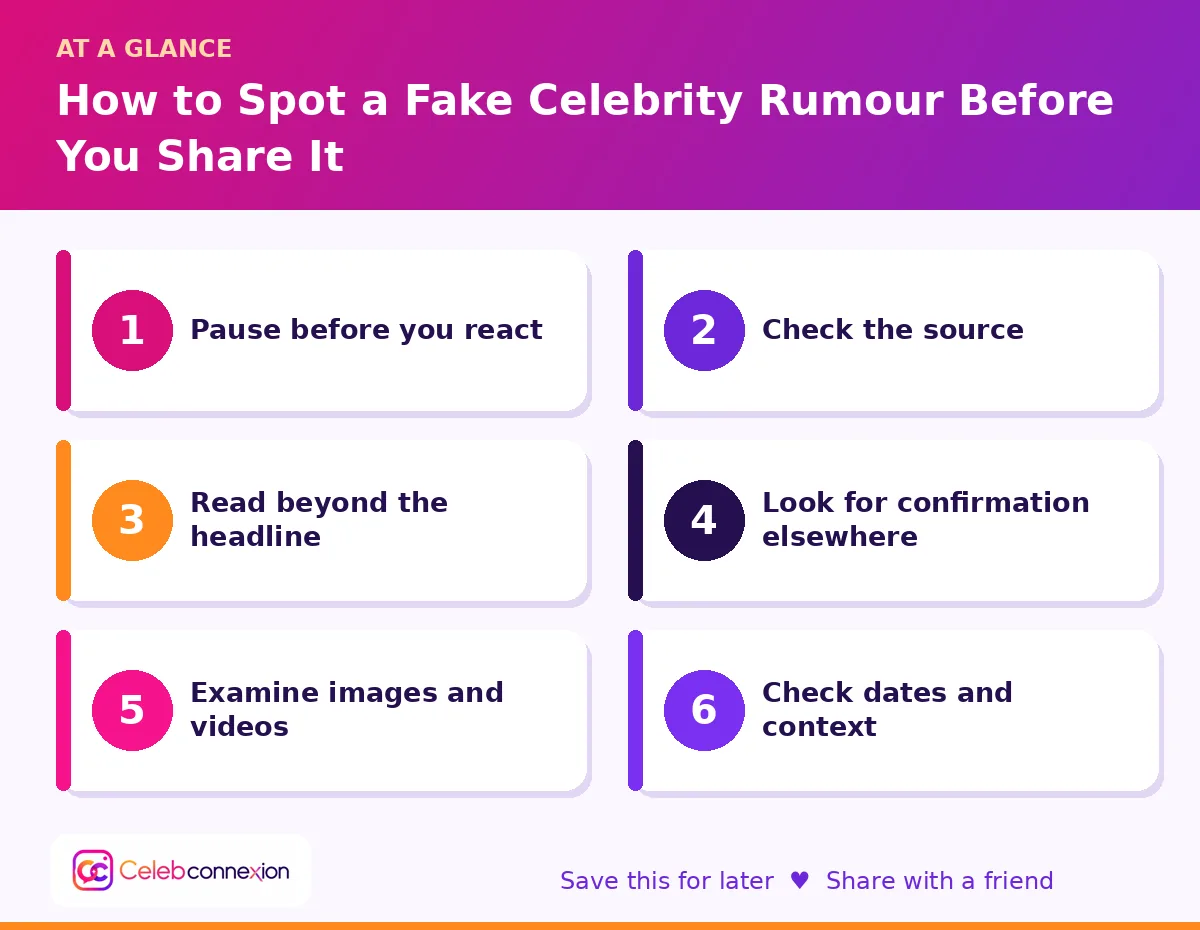
Pause before you react
Strong emotions such as anger, shock or excitement make us share quickly. When a story makes you feel something intense, take a breath and ask whether it could be exaggerated. Pausing for thirty seconds is a powerful first filter.
Check the source
Who published the news? Look for a reliable outlet with a clear editorial process, named reporters and a history of accurate reporting. Be careful with unfamiliar websites, anonymous pages and accounts that exist mainly to generate clicks. Check the web address for small spelling differences, since imitation sites often copy the names of well-known publications.
Read beyond the headline
Headlines are designed to attract attention and may not match the article. Open the story and see whether it provides evidence, named sources or official statements. If the details are vague, such as “sources say” without any context, treat it cautiously. Some articles reveal in the final lines that the claim is only a rumour or opinion.
Look for confirmation elsewhere
Important news about a public figure is usually reported by several credible sources. Search for the story using different keywords. Check whether the person, their representatives or the organisation involved has made an official statement. If only one page carries the story, it may not be accurate.
Examine images and videos
Photos can be edited, taken out of context or generated by software. Look for odd shadows, blurry edges, unnatural hands or inconsistent backgrounds. Use reverse image search tools to see where a picture first appeared. Videos may be old clips presented as new, or edited to change meaning. Be wary of quotes shown on images, because screenshots are easy to fake.
Check dates and context
Old stories often resurface and appear new. Look at the publishing date, and read the text to see whether it refers to current events. A genuine photo from years ago can be used to support a false claim today.
Beware of fake accounts and screenshots
Screenshots of social media posts or messages can be fabricated. Check the official profile for the original post. Look for verification badges, but remember that they are not a guarantee on their own. Impersonation accounts often mimic names and photos.
Watch for emotional manipulation
Rumours that attack someone’s character, mention tragedy or demand that you “share before it is deleted” often rely on pressure. Genuine news does not need panic. If a post pushes you to forward it immediately, be suspicious.
Use fact-checking resources
Independent fact-checking organisations investigate viral claims and publish their findings. Searching for the claim along with the words “fact check” may reveal an existing report. Many platforms also add labels or context to disputed content.
Think about the harm
False stories can hurt reputations, families and mental health. Even if the subject is famous, they are real people. Sharing unverified claims may also expose you to legal or platform consequences in some cases. If you accidentally shared a rumour, delete it and share a correction if possible.
Build healthy habits
Follow a few reliable sources rather than relying on random forwards. Teach family members to verify before sharing, since older relatives often receive many chain messages. Encourage open conversations about misinformation without shame.
💬 Frequently asked questions
⭐ Key takeaways
- Pause when a post makes you angry or shocked, because strong emotion drives quick sharing.
- Check the source, read beyond the headline and look for confirmation from several credible outlets.
- Reverse image search and date checks expose edited photos and old stories presented as new.
- If you cannot verify a claim, do not share it, and correct yourself quickly if you already did.
🎯 The bottom line
Verifying a rumour takes only a few minutes: pause, check the source, search for confirmation, inspect media and think about harm. When we slow down, we protect others and make the internet a more trustworthy place for everyone.