Influencers 📖 4 min read
When brands plan influencer campaigns, one of the first questions is who to work with. Influencers are often grouped by follower count into tiers: nano, micro, macro and mega. Each tier has strengths and trade-offs. Choosing the right one depends on your budget, goals and audience. Follower ranges vary by source and platform, so treat the categories below as general guidance rather than strict rules.
Nano influencers
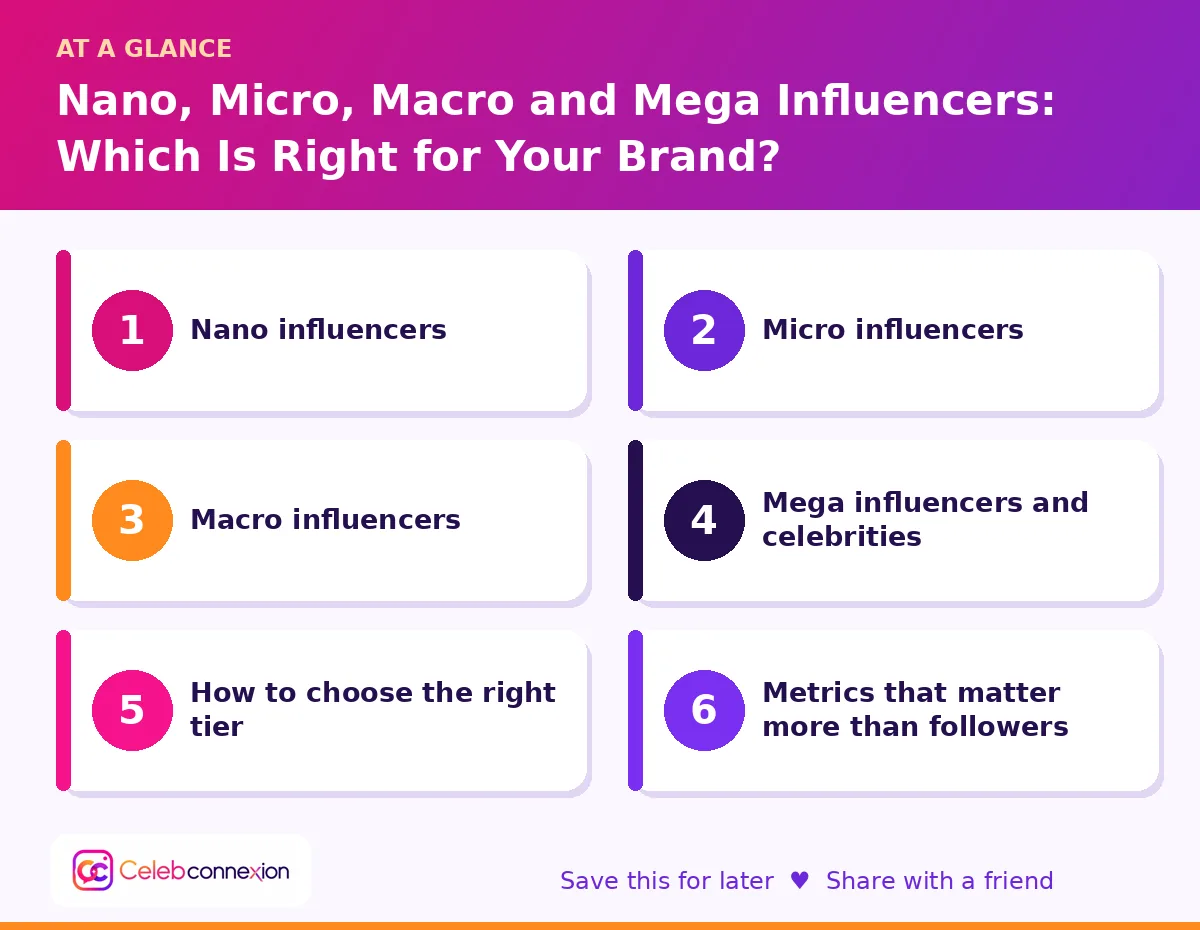
Nano influencers have small but often very engaged audiences, typically in the low thousands. Their followers are frequently friends, neighbours or people from a local community. Because the relationship is personal, recommendations can feel like advice from a friend. Nano creators are often happy to receive products or small payments, making them suitable for tight budgets and local businesses.
The trade-off is reach. A single nano influencer will not reach a large audience, so brands often work with many at once. Managing multiple small partnerships takes time and organisation.
Micro influencers
Micro influencers usually have a larger following but still focus on a clear niche, such as skincare, mobile games or healthy cooking. They are known for credibility and consistent engagement. Many brands consider this tier a sweet spot, because the audience is specific and the cost is manageable.
Micro creators often produce high-quality content and respond to comments, which helps build trust. However, their availability can be limited if they run their channels part-time.
Macro influencers
Macro influencers have a substantial audience across a broader range of interests. They often work with agencies and treat content creation as a full-time profession. Campaigns with macro creators can deliver strong reach and professional production, which is useful for product launches and brand awareness.
The cost is higher, and engagement rates can be lower in percentage terms than smaller creators because the audience is more diverse. Brands need clear briefs and contracts to get the best results.
Mega influencers and celebrities
Mega influencers have very large audiences and may include film stars, sportspeople and well-known online personalities. They offer huge visibility and cultural impact. A campaign with a mega influencer can start nationwide conversations.
The investment is significant, and the audience may be too general for niche products. Their feeds may already be full of paid content, which can reduce attention for any single brand.
How to choose the right tier
Start with your goal. If you want awareness for a new product across the country, macro or mega influencers can help. If you need trust and conversions in a specific community, nano and micro creators are often better. If your budget is small, work with several smaller creators instead of one large name.
Consider your audience too. A beauty brand for teenagers needs different creators than a financial service for working professionals. Look beyond numbers and check content quality, tone and values.
Metrics that matter more than followers
Engagement rate, which compares likes, comments and shares to audience size, shows how active followers are. Audience demographics tell you whether the right people are watching. Past brand collaborations show professionalism. Review comments for genuine conversations, not generic replies. Ask for analytics screenshots where appropriate.
Mixing tiers in one campaign
Many successful campaigns combine tiers. A mega creator may spark attention, macro creators may explain the product to larger groups and micro or nano creators may share honest reviews and answer questions. This layered approach builds both reach and credibility.
For creators: know your tier
If you are a creator, understand your strengths. Smaller creators can highlight engagement and niche knowledge. Larger creators can emphasise reach and production quality. Prepare a media kit with your statistics, audience details and sample work.
💬 Frequently asked questions
🎯 The bottom line
The best influencer is not the one with the biggest number but the one whose audience matches your goals. Define your objective, understand each tier and test before you scale. Thoughtful choices lead to stronger campaigns and better relationships with creators.