
Gossip 📖 4 min read
Cameras follow public figures to airports, restaurants and family events. Photographs of everyday moments appear online within minutes. Many people enjoy these glimpses, yet others ask whether this attention has gone too far. The debate about paparazzi culture touches on public interest, personal safety and basic human dignity. Here is a balanced look at the issues.
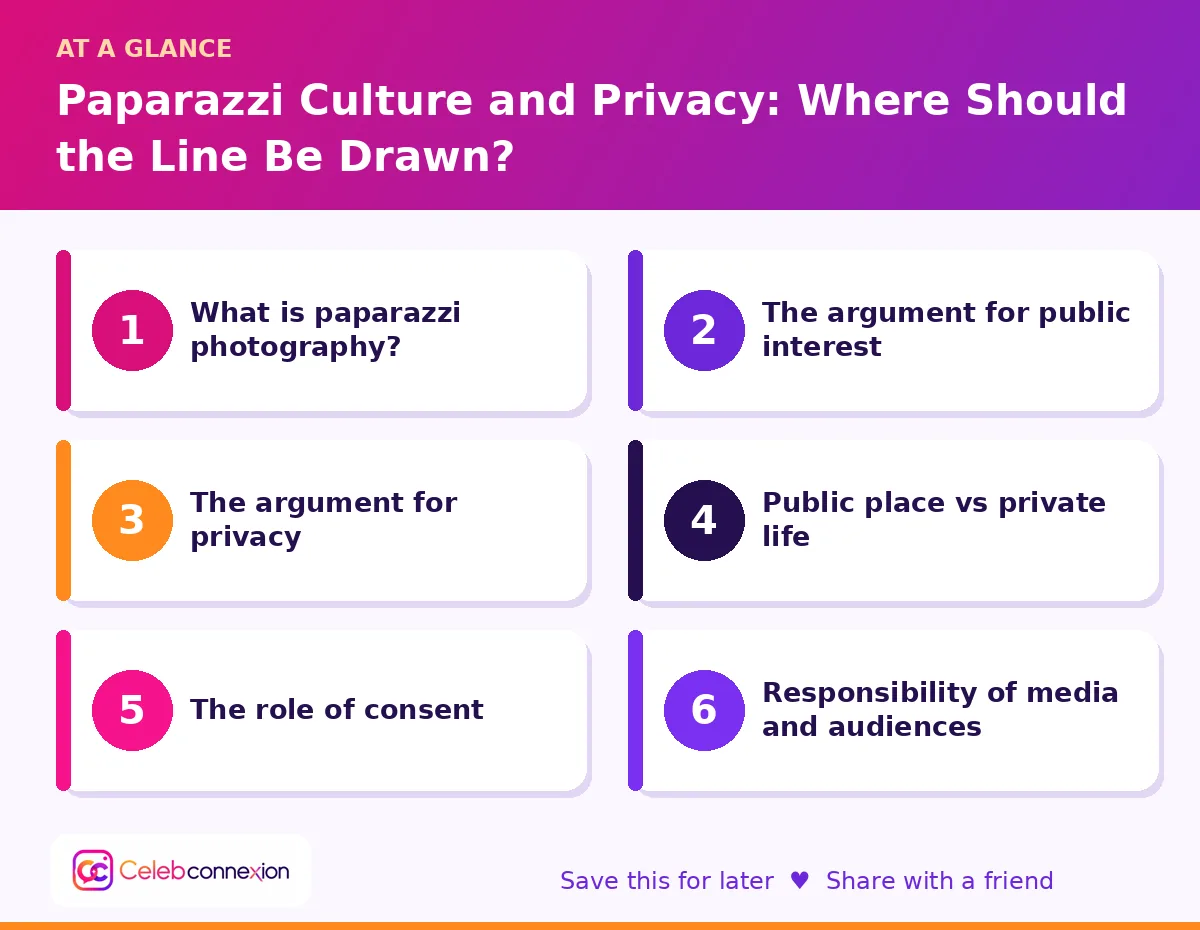
What is paparazzi photography?
The term refers to photographers who take pictures of well-known people, often without their agreement, and sell them to media outlets. Paparazzi work is driven by demand: if audiences and publishers want such images, there is a market for them. It differs from official photography at events, where the subject expects coverage.
The argument for public interest
Supporters argue that public figures choose a profession that involves attention, and that coverage can be part of reporting on influential people. Images from public places may show something relevant, such as the attendance at an event or a public statement. Journalism sometimes needs to examine the behaviour of people with power or influence.
The argument for privacy
Critics respond that being famous does not remove basic rights. Everyone deserves safe, private time, especially with family. Constant pursuit can cause stress and anxiety and may lead to dangerous situations, such as aggressive chases. Children of public figures did not choose fame, and many people believe they should be protected.
Public place vs private life
A key question is where legitimate public interest ends. A photograph at a premiere differs from covert pictures taken through a window or at a private ceremony. Laws about image rights and privacy differ across countries and change over time, so it is wise to check current rules. Ethical standards in journalism generally ask whether the content serves a genuine public interest and whether it respects dignity.
The role of consent
Consent is central. Some public figures cooperate with photographers and even invite them to specific events, because publicity is part of their work. Others set boundaries about private moments. Respecting those boundaries is a sign of ethical practice. Posting images of someone in distress or in a vulnerable situation raises serious concerns.
Responsibility of media and audiences
Publishers decide which images to buy and how to present them. Headlines that mock or shame people can encourage cruelty in comments. Audiences also play a part. Clicking, sharing and commenting create demand. Choosing outlets that follow ethical guidelines encourages better practice.
Safety concerns
Aggressive photographers can cause accidents or confrontations. Publishing a person’s location in real time can put them at risk. Responsible outlets avoid sharing sensitive details such as home addresses or travel plans while a person is still there.
How public figures manage attention
Many celebrities work with publicists and security to manage coverage. Some share curated moments on their own channels, controlling the story. Others set clear boundaries for family events and children. Social media allows people to speak directly to fans, which can reduce reliance on third-party photographers.
What ethical entertainment journalism looks like
It verifies facts, avoids invasive tactics, respects the rights of minors, corrects mistakes promptly and distinguishes between news and speculation. It treats subjects as people, not just content.
Practical steps for readers
Support outlets that report responsibly. Avoid sharing intrusive images. Report harassment or abusive comments. Remember that a photograph shows a moment, not the full story.
💬 Frequently asked questions
⭐ Key takeaways
- Public interest and personal privacy both matter, and the balance depends on context and consent.
- Safety, children’s rights and the difference between public events and private moments are central to the debate.
- Publishers and audiences both influence the market for intrusive images.
- Ethical outlets verify facts, avoid invasive tactics and correct mistakes promptly.
🎯 The bottom line
Fame brings visibility, but not an end to privacy. A healthy media culture balances legitimate public interest with respect, safety and dignity. As audiences, our choices about what we click and share help shape that balance.