
Fashion 📖 3 min read
Clothing is a big part of everyday life, but producing it uses water, energy and materials, and discarded garments can become waste. The idea of sustainable fashion is to reduce harm by making thoughtful choices. You do not need to overhaul your life or spend more. Small steps, repeated by many people, can make a real difference. Here are practical ideas for Indian shoppers.
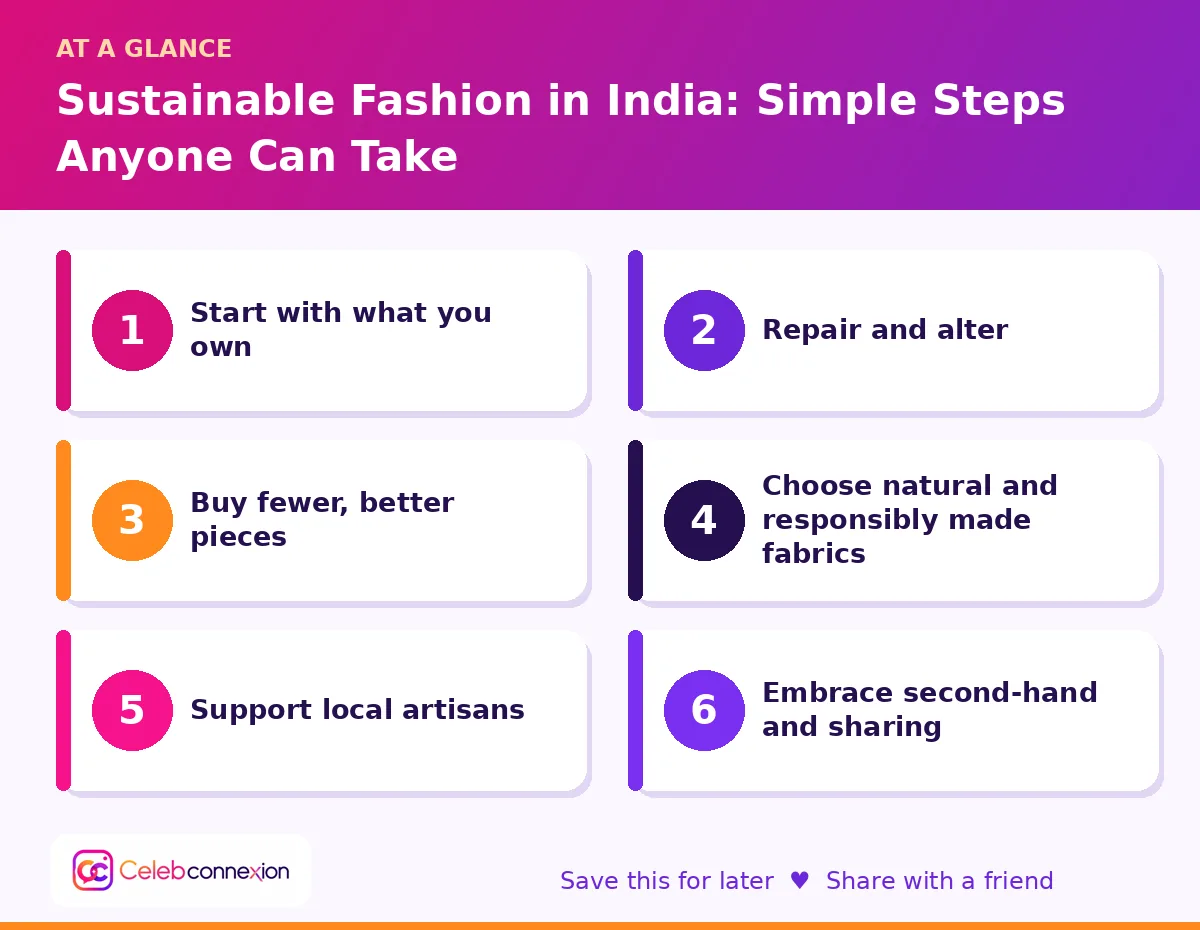
Start with what you own
The most sustainable garment is the one already in your wardrobe. Before shopping, review your clothes and find new ways to wear them. Restyle old sarees as dupattas, convert a loose kurta into a shirt dress or pair forgotten pieces differently. Wearing items for longer is one of the best ways to reduce your footprint.
Repair and alter
India has a strong tradition of tailoring, and local tailors can fix zips, replace buttons, adjust sizes and refresh worn garments. A small repair can give a piece a second life. Learning basic stitching, such as sewing a button or fixing a hem, is also useful.
Buy fewer, better pieces
Choose items that fit well, use durable fabrics and suit your style. Consider how often you will wear the piece and how easily it combines with other clothes. Quality does not always mean high price; careful checking of stitching and fabric can help you find value at many budgets.
Choose natural and responsibly made fabrics
Cotton, linen, jute blends and handloom textiles are widely available in India and often suit the climate. Look for credible information about how a product is made, rather than relying only on vague claims such as “eco-friendly”. Be cautious about greenwashing, which is when marketing exaggerates environmental benefits.
Support local artisans
Handloom and handicraft traditions across India employ many weavers, dyers and embroiderers. Buying directly from artisans, cooperatives or trusted retailers can support livelihoods and keep skills alive. Ask about the origin of the product and fair pay where possible.
Embrace second-hand and sharing
Pre-loved clothing platforms, thrift stores, clothing swaps and rental services extend the life of garments. Renting is particularly useful for occasion wear that you may not wear again. Selling or donating clothes in good condition keeps them in use.
Wash and care responsibly
Wash clothes only when needed, use cold or lukewarm water, and air dry in sunlight when possible. This saves energy and protects fabric. Follow care labels, and avoid over-drying. Using a full load in the washing machine reduces water use.
Dispose of clothes thoughtfully
If a garment is beyond repair, look for textile recycling or upcycling initiatives in your city. Old cotton fabric can be turned into cleaning cloths, cushion covers, bags or quilts. Avoid throwing wearable clothes in the bin when someone could use them.
Be mindful of online shopping
Quick delivery and easy returns can encourage overbuying. Add items to a wishlist and wait a few days before purchasing. Measure carefully to avoid returns, and group orders to reduce packaging.
Do not aim for perfection
Sustainability is a journey. You may not always make the ideal choice, and that is fine. Focus on consistent improvement: buy less, wear more, repair often and choose carefully.
💬 Frequently asked questions
⭐ Key takeaways
- The most sustainable outfit is the one already in your wardrobe, so restyle and repair before buying.
- Local tailors, artisans and handloom weavers make sustainable choices accessible across India.
- Second-hand, rental and clothing swaps extend the life of garments.
- Small, consistent habits matter far more than trying to be perfect.
🎯 The bottom line
Sustainable fashion starts with simple, mindful habits: use what you have, buy with care, support artisans and extend the life of your clothes. Every outfit you wear again is a small win for your wallet and for the planet.