
Celebrity 📖 4 min read
Many people have felt it: a favourite actor or creator posts a small life update and you feel genuinely happy or worried, even though you have never met. Psychologists call this kind of one-sided bond a parasocial relationship. It is a normal part of modern media life, and understanding it can help fans, creators and brands treat it with care.
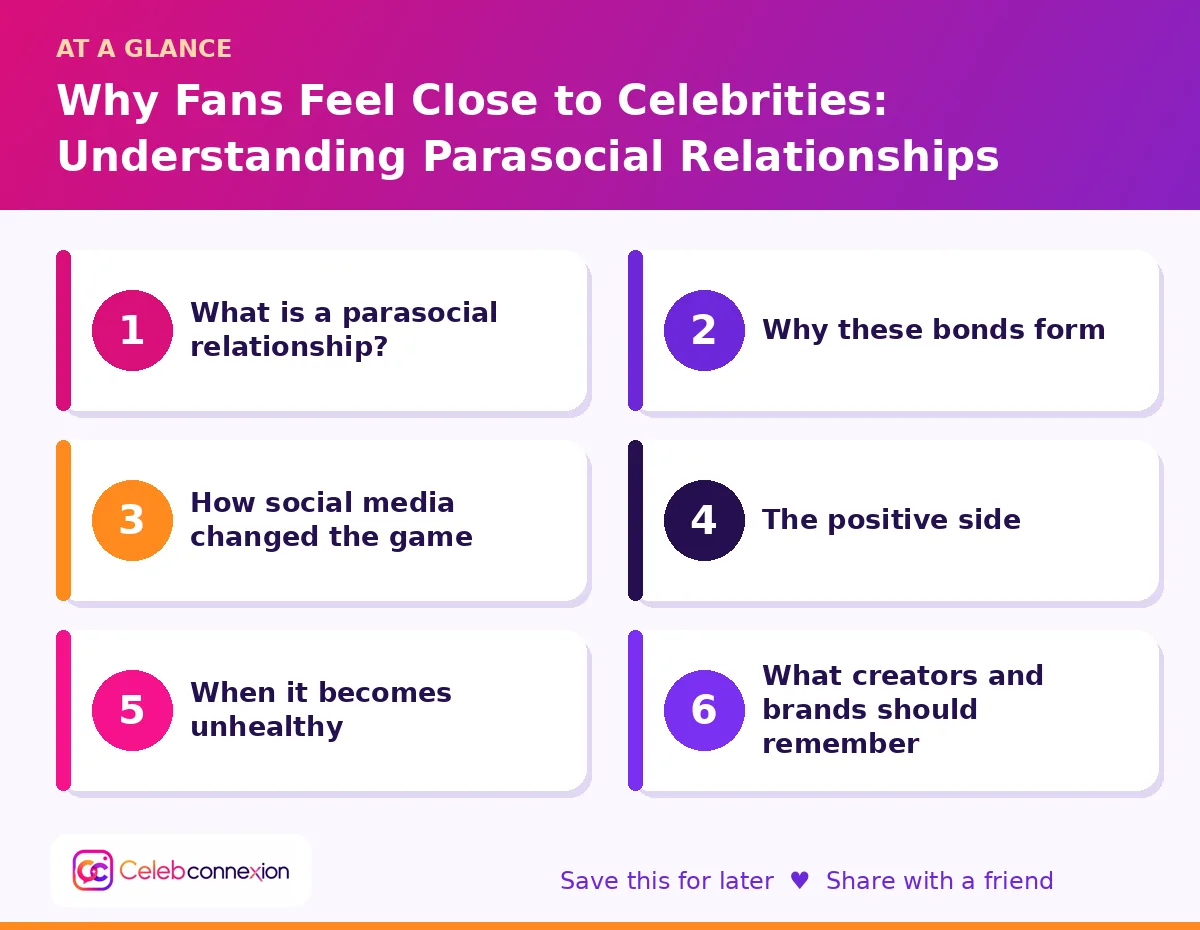
What is a parasocial relationship?
The term describes a one-way emotional connection with a media figure. The audience member knows a lot about the person, feels familiar with them and may invest emotionally, while the public figure does not know the individual fan. The idea was first discussed by researchers studying television hosts, and it has grown more relevant as social platforms make public figures feel closer than ever.
Why these bonds form
Several things make us feel close to someone we watch. Repetition is one: seeing a face or hearing a voice regularly builds familiarity. Self-disclosure matters too, because when a person shares routines, opinions and personal stories, viewers feel trusted. Direct address, such as speaking to the camera, makes the experience feel like a conversation. Finally, shared identity plays a role. If a public figure’s values or struggles match ours, the bond deepens.
How social media changed the game
Earlier, fans mostly met celebrities through films, magazines and interviews. Today, daily stories, live streams and casual posts create a sense of ongoing presence. Comment sections and replies create the feeling that access is possible. Platforms also reward personal, relatable content, so many public figures lean into an informal style that increases the sense of friendship.
The positive side
Parasocial bonds are not automatically unhealthy. They can offer comfort, inspiration and a feeling of belonging, especially when fans connect with each other over shared interests. A creator’s honest story about overcoming difficulty may encourage someone to try something new. Fan communities can organise charity drives, support projects and create friendships among members.
When it becomes unhealthy
Problems appear when the bond starts to replace real relationships or causes distress. Warning signs include feeling personally hurt by a public figure’s private choices, spending money you cannot afford to feel closer, believing the person owes you attention or becoming angry when they do not respond. Extreme cases can lead to harassment, which is never acceptable. If a fan relationship is affecting sleep, studies or work, it is time to step back.
What creators and brands should remember
Public figures have a responsibility to be honest about what their relationship with followers can and cannot be. Clear boundaries, respectful language and transparent promotion protect everyone. Brands should avoid exploiting emotional closeness through manipulative sales tactics. Trust earned through honesty lasts longer than trust created through pressure.
Tips for fans
Enjoy your favourites, but keep a healthy balance. Spend time with friends and family offline. Remember that online content is selected and edited. Avoid sharing private details of public figures that were not offered by them. Take breaks from feeds when they make you anxious. If you notice strong emotions, talk to someone you trust, and consider professional support if the feelings become overwhelming.
Tips for creators
Set clear expectations about when you reply and what you share. Use community guidelines to discourage harassment. Encourage followers to connect with each other, not only with you. Thank people sincerely without promising availability you cannot offer. These habits make your community kinder and your own life easier.
🎯 The bottom line
Parasocial relationships are a natural result of how modern media works. They can be warm and meaningful when kept in perspective, and risky when they crowd out real connection. By understanding why we feel close to people we have never met, fans can enjoy their favourites more mindfully and creators can build communities based on respect rather than illusion.
## Frequently asked questions
Are parasocial relationships a mental illness? No. They are a common psychological pattern. They become a concern only when they cause distress or replace real-life relationships.
Can creators reduce unhealthy attachment? Yes. Clear boundaries, honest communication about availability and community guidelines help fans keep a healthy perspective.
Is it wrong to feel sad when a favourite star retires or leaves a show? Not at all. Mild sadness is natural, since you have spent real time and attention on their work.