
OTT & Web 📖 4 min read
You tell yourself you will watch one episode and then sleep. Three episodes later, it is past midnight and you are still watching. This experience is not just about willpower; it is partly the result of storytelling techniques and platform design. Understanding why web series are so binge-worthy can help you enjoy them without losing sleep.
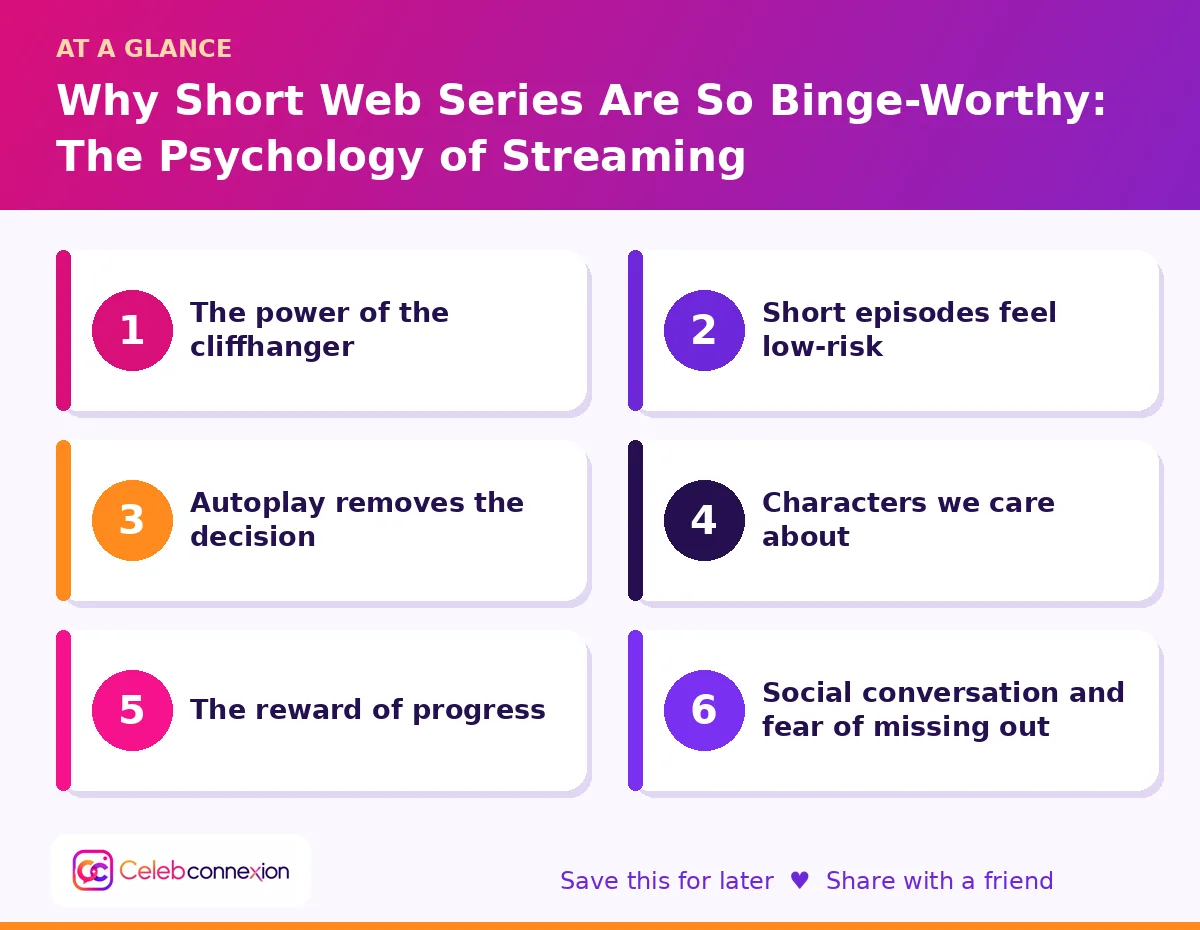
The power of the cliffhanger
Many web series end episodes on an unanswered question: a secret revealed, a door opening, a sudden twist. Our minds dislike unfinished stories, so we want to resolve the tension. Writers deliberately plan these moments, often placing the strongest hooks at the end of each episode and at the end of each season.
Short episodes feel low-risk
Episodes that run for around half an hour feel easier to start than a long film. Because the time commitment seems small, we agree to “just one more”. Yet small commitments add up. Short episodes also allow tighter writing, with fewer slow scenes and a faster pace that holds attention.
Autoplay removes the decision
Streaming apps often start the next episode automatically after a countdown. Instead of choosing to continue, you have to choose to stop. This small design detail changes behaviour because doing nothing becomes the default. Many platforms allow you to turn autoplay off, which is a simple way to regain control.
Characters we care about
Series give us time to know characters deeply. We follow their growth, mistakes and relationships across many hours. That investment creates emotional bonds, so we keep watching to see what happens to them. Strong casting and relatable flaws make this effect even stronger.
The reward of progress
Finishing episodes gives a feeling of progress, like ticking items off a list. Watching a series from start to end offers a clear goal, and completing it creates satisfaction. Season counts, progress bars and “continue watching” rows reinforce that sense of momentum.
Social conversation and fear of missing out
When a series becomes popular, people discuss it online and in person. Avoiding spoilers and joining conversations motivates viewers to finish quickly. Watching a show at the same time as friends also makes it feel like a shared event.
Genre and pacing choices
Thrillers, crime dramas and mysteries are especially bingeable because each episode reveals new clues. Comedies and slice-of-life shows work through comfort and familiarity. Whatever the genre, a rhythm of tension, small resolution and a new question keeps the cycle going.
The downside of bingeing
Late-night marathons can affect sleep, mood and daily routines. Sitting for long periods is unhealthy, and some viewers feel empty after finishing a series. If you notice that watching is replacing sleep, meals or responsibilities, set limits. Bingeing is fine as a treat, but habits matter.
How to binge more mindfully
Decide how many episodes you will watch before you start. Turn off autoplay and set a timer. Take a short walk or stretch between episodes. Avoid watching in bed if it keeps you awake. Finally, leave time to reflect on what you watched, because discussion and thought make stories more memorable.
What creators can learn
Writers and producers can use these ideas ethically: build strong characters, create satisfying arcs and respect the audience’s time. A good cliffhanger invites curiosity, but a story that relies only on tricks can leave viewers disappointed. The best series reward attention with meaningful payoffs.
💬 Frequently asked questions
⭐ Key takeaways
- Cliffhangers, short episodes and autoplay all reduce the effort needed to keep watching.
- Characters and story progress create emotional investment that pulls you into the next episode.
- Occasional bingeing is fine, but frequent late-night sessions can affect sleep and routine.
- Turn off autoplay and decide your stopping point before you start.
🎯 The bottom line
Web series are binge-worthy because storytelling, design and psychology work together. Knowing the tricks lets you enjoy the stories while staying in control of your time. Watch what you love, but remember that sleep and real-life moments deserve a place in your schedule too.